Generic
Why Do Some Sounds Hurt My Ears? Understanding Sound Sensitivity
By Team Zenaud | Nov. 26, 2026
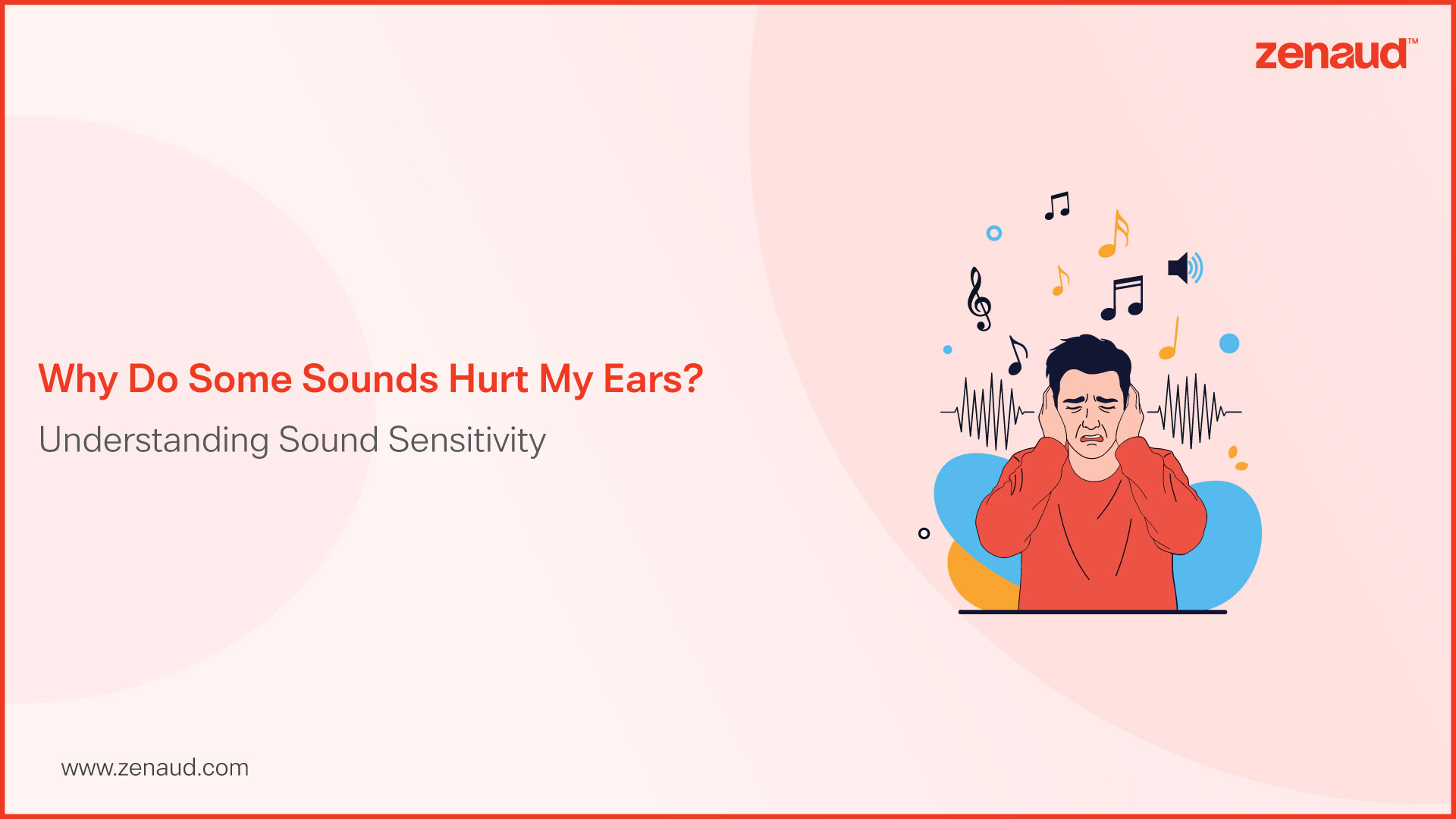
Most people find a slamming door or a clattering dish irritating. Others experience something sharper, a sudden pain or a tightness that persists long after the noise has ended. If you have ever asked yourself why do sounds hurt my ears, you are not alone. The problem is more common than most people assume, and it has recognised explanations.
Reduced Tolerance to Everyday Noise
Many people with this difficulty are not reacting to especially loud sounds. Running water, cutlery against a plate, passing traffic or a busy restaurant may be sufficient. The response varies. One person feels mild irritation, while another feels pressure in the ear or genuine distress.
Doctors and audiologists use different terms depending on the pattern of the reaction:
- Hyperacusis: Ordinary sounds seem uncomfortably loud or painful.
- Misophonia: A strong emotional reaction to specific sounds, such as chewing or tapping.
- Phonophobia: A fear of certain sounds, often associated with anxiety.
- Recruitment: Associated with hearing loss, where quiet sounds remain hard to hear but louder ones become disproportionately intense very rapidly.
Possible Causes
The reasons differ from one person to the next, and sometimes no cause can be identified. Sensitivity to loud sounds is often associated with the following:
- Prolonged noise exposure at work, at concerts or through headphones.
- Sudden acoustic trauma, such as an explosion or an alarm sounding close to the ear.
- Ear infections or other conditions of the middle or inner ear.
- Head or neck injury, including concussion.
- Tinnitus, which commonly accompanies heightened sensitivity.
- Neurological conditions such as migraine.
- Certain medications that affect the auditory system.
Emotional state also plays a part. Stress, anxiety and inadequate sleep can lower the point at which a sound becomes uncomfortable. The ear is not always damaged either. In some people, the auditory pathways in the brain become overactive and amplify signals that would ordinarily pass unnoticed.
Recognising the Symptoms
The pattern varies, but certain complaints are reported repeatedly. These include discomfort or pain on hearing everyday noise, a sense of fullness in the ears, and headaches or dizziness after time in loud surroundings. Many people also become tense in crowded places and begin to avoid restaurants, social gatherings or public transport.
Once these reactions start to affect your work, relationships or daily routine, it is unwise to delay seeking advice.
Clinical Assessment
An audiologist generally begins with a detailed case history and a hearing evaluation. Pure-tone audiometry and measurement of loudness discomfort levels are commonly used, the latter showing the point at which sound becomes uncomfortable. These findings help to distinguish hearing loss from sensitivity and from other contributing conditions. A medical examination may also be advised to rule out an underlying cause.
Approaches to Management
Treatment depends on the cause and its severity, and a personalised plan usually works best. The main options are as follows:
- Sound therapy: Gentle exposure to low-level sound, guided by a professional, can help the auditory system adjust gradually.
- Counselling and cognitive behavioural therapy: These address the emotional response to sound and can ease the associated anxiety.
- Protective measures: Earplugs are useful in genuinely loud settings. Wearing them constantly in quiet surroundings, however, may increase sensitivity over time.
- Treating related conditions: Managing tinnitus, hearing loss or infection can often relieve the symptoms.
Rest, stress management and appropriate limits on noise exposure may also support recovery. Where hearing loss is present as well, well-fitted hearing aids with carefully controlled amplification can improve comfort and clarity together.
Knowing When to Seek Help
This is not a difficulty to be endured in silence. Sudden onset, pain, a change in hearing, dizziness or persistent ringing in the ears all call for prompt assessment. Early evaluation can identify the cause and help prevent the problem from becoming more firmly established.
With an accurate diagnosis and the right support, many people find that their tolerance improves and that daily life becomes more comfortable.
If everyday sounds have become hard to bear, book a consultation with Zenaud today at zenaud.com.
Related Blogs
What Is Hidden Hearing Loss? Symptoms You Shouldn't Ignore
By Sri Sai Koti Chennupati | Sept. 21, 2026
Hearing Loss and Sleep: Can Poor Sleep Affect Your Hearing?
By Sri Sai Koti Chennupati | Sept. 10, 2026
Hearing Loss After an Ear Infection: What You Need to Know
By Sri Sai Koti Chennupati | Aug. 17, 2026
Contact us
We are here for all your hearing needs, from hearing tests to hearing aids. Fill out the form below, and we will give you a call soon.
Recent Blogs
By Team Zenaud | Nov. 23, 2026
By Team Zenaud | Nov. 20, 2026
By Team Zenaud | Nov. 18, 2026
By Team Zenaud | Nov. 16, 2026
By Team Zenaud | Nov. 12, 2026