HEARING CARE
Middle Ear Infection
By Team Zenaud | March 16, 2026
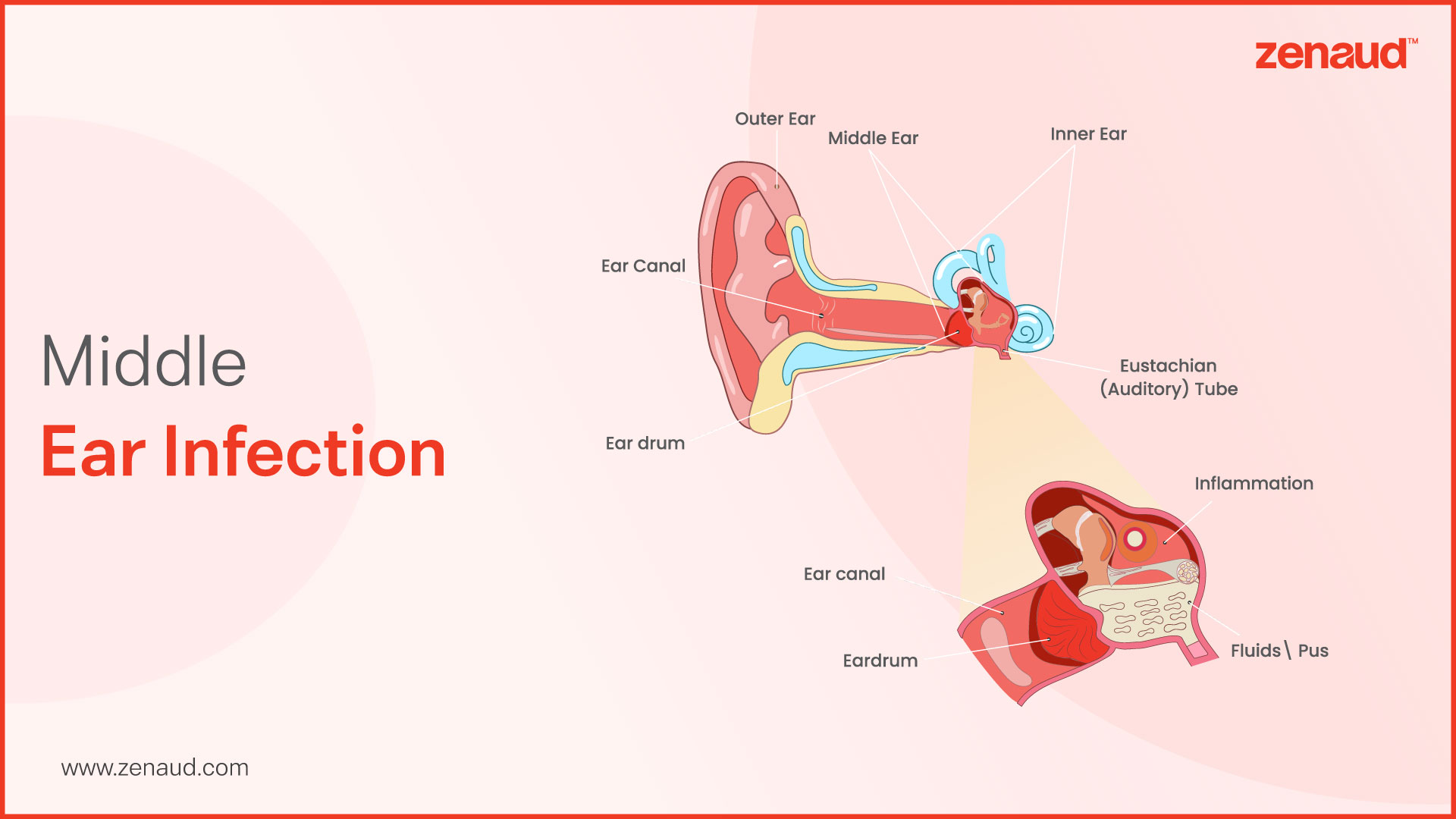
Middle Ear Infection: Symptoms, Treatments & Home Remedies You Should Know
A middle ear infection is one of the most common health complaints affecting both children and adults worldwide. Whether it strikes suddenly or builds gradually, the discomfort it brings can significantly impact daily life. Understanding what it is, recognising the signs early, and knowing your treatment options can make all the difference.
What Is a Middle Ear Infection?
Otitis media, the medical term for a middle ear infection, occurs when the space behind the eardrum becomes inflamed and filled with fluid or pus. It is often triggered by a bacterial or viral infection — frequently following a cold, throat infection, or sinus congestion. In children, the shorter and more horizontal Eustachian tubes make them especially vulnerable, though adults are far from immune.
Middle Ear Infection Symptoms
The identification of symptoms should take place during the initial stages. Common middle ear infection symptoms include:
- Sharp or dull ear pain which becomes worse when people lie down.
- People experience difficulty hearing or they hear sounds which seem to come from a distance.
- The ear becomes blocked by mucus or pus which flows out of the ear
- Young children experience fever which shows itself through increased body temperature.
- Infants display a tendency to pull on their ears through persistent movements.
- People experience headaches together with irritability and sleeping difficulties.
- A person experiences deep ear pressure which creates a sensation of fullness.
People should go to the doctor immediately when their symptoms continue for more than two to three days and they develop a high fever. The identification of medical conditions at an early stage helps to avoid future complications.
Middle Ear Infection Treatment
The right middle ear infection treatment depends on the severity and cause of the infection. Here is what medical professionals typically recommend:
- Antibiotics: When a bacterial cause is confirmed or strongly suspected, a course of antibiotics (most commonly amoxicillin) is prescribed. It is vital to complete the full course even if symptoms improve early.
- Pain relief: Over-the-counter pain relievers such as ibuprofen or paracetamol help manage pain and reduce fever. Eardrops may also be prescribed for additional comfort.
- Watchful waiting: For mild cases, especially in adults, doctors may recommend a wait-and-watch approach, allowing the immune system to resolve the infection naturally within a week or two.
- Ear tubes (grommets): For recurring infections that do not respond to antibiotics, a minor surgical procedure to insert ventilation tubes into the eardrum may be advised.
Home Remedies for Middle Ear Infection
Alongside medical care, several home remedies for middle ear infection can ease discomfort and support recovery:
- Warm compress: Holding a warm (not hot) cloth against the affected ear for 10–15 minutes can soothe pain and reduce inflammation.
- Elevate the head: Sleeping with your head slightly elevated helps prevent fluid from pooling in the middle ear.
- Stay hydrated: Drinking plenty of fluids thins mucus and supports the immune response.
- Steam inhalation: Inhaling steam helps open up the Eustachian tubes, easing pressure and drainage.
- Garlic oil drops: Garlic has natural antimicrobial properties. Warm garlic-infused oil drops are a traditional remedy — but only use if the eardrum is intact.
- Ginger tea: Ginger's anti-inflammatory properties may help reduce swelling and discomfort when consumed regularly during illness.
Home remedies are supportive, not curative. They work best alongside — not instead of — professional medical advice, especially in children or severe cases.
When to See a Doctor
Most cases of otitis media middle ear infection resolve within a week or two. However, consult a healthcare provider if you notice worsening pain, hearing loss, discharge from the ear, or if a child under 2 years shows any signs of infection. Repeated infections may signal an underlying issue that needs specialist attention.
Prevention Tips
Prevention is always better than cure. Breastfeeding infants, keeping vaccinations up to date (especially pneumococcal and flu vaccines), avoiding smoke exposure, and practising good hand hygiene all significantly reduce the risk of developing a middle ear infection.
At Zenaud, we believe informed patients recover better. Understanding your symptoms and acting early gives you the best chance of a swift, complication-free recovery.
Concerned about ear pain or recurring infections? Speak to a Zenaud specialist today.
Book a Consultation at zeanud.com
FAQs:
How to cure middle ear infection?
A middle ear infection is usually treated with medication, rest, and proper medical care to reduce infection and relieve symptoms.
How to treat middle ear infection?
Treatment may include prescribed medicines, pain relief, and keeping the ear dry while the infection heals.
Can middle ear infection be cured?
Yes, most middle ear infections can be cured with timely treatment and proper medical care.
Can middle ear infection cause hearing loss?
Yes, a middle ear infection can temporarily affect hearing due to fluid buildup behind the eardrum.
Contact us
We are here for all your hearing needs, from hearing tests to hearing aids. Fill out the form below, and we will give you a call soon.
Recent Blogs
By Team Zenaud | March 16, 2026
By Team Zenaud | March 16, 2026
By Team Zenaud | March 16, 2026
By Team Zenaud | March 16, 2026
By Team Zenaud | March 16, 2026
