Generic
Can Loud Music Cause Permanent Hearing Loss?
By Team Zenaud | Nov. 2, 2026
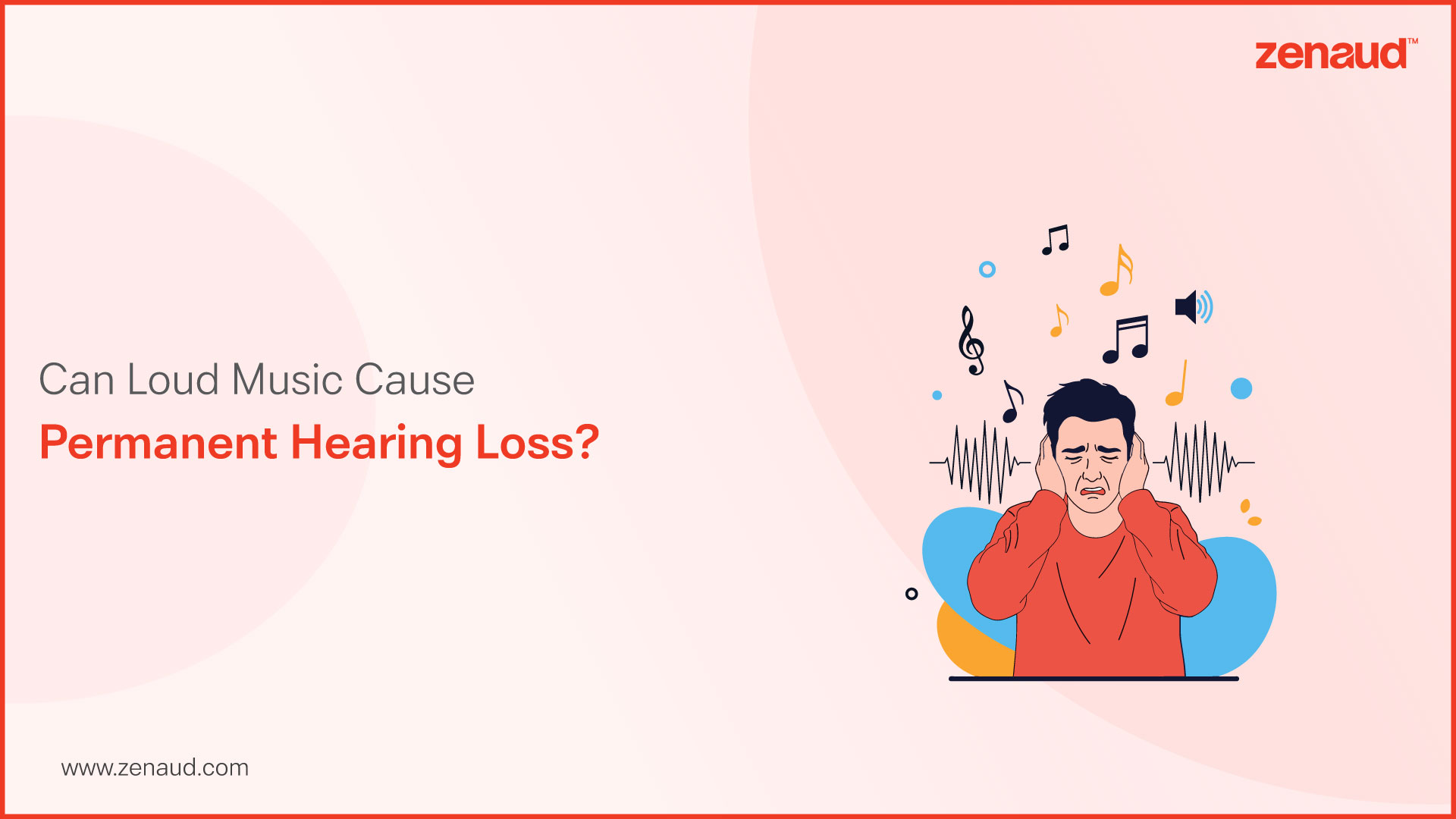
Many people listen to music for hours each day, on earphones during the commute, through speakers at home, or in a crowded hall at a concert. It rarely occurs to them that the sound they enjoy may be wearing down their hearing. Can loud music cause permanent hearing loss? Yes, it can, and the damage usually happens without warning.
How the Ear Processes Sound
The cochlea, a small spiral structure in the inner ear, holds thousands of sensory hair cells. These cells convert sound vibrations into signals that the brain interprets as speech and music. In humans, they cannot regenerate once injured. Sustained loud sound can damage or destroy them, which is why loud music and hearing loss are so closely linked.
Understanding Music Induced Hearing Loss
Music induced hearing loss usually develops over months or years. High-pitched sounds tend to fade first, such as birdsong or the softer consonants in speech. Because the change is gradual, many people adapt without noticing and seek help only when conversations have already become difficult.
A single exposure can also cause harm. A very loud concert, or headphones at full volume, may cause acoustic trauma and leave persistent ringing or reduced hearing. Can loud music damage hearing after one exposure? In some cases, it can.
The Role of Volume and Duration
Risk depends on how loud the sound is and how long the ears are exposed to it. Safety guidelines set the limit at roughly eight hours at 85 decibels, about the level of heavy city traffic. For every additional 3 decibels, the safe listening time is halved.
- 100 decibels, typical of a concert or earphones at high volume: about 15 minutes.
- 110 decibels, reached at some clubs and festivals: under two minutes.
These figures show how quickly an enjoyable evening can become hazardous.
Recognising the Warning Signs
The ears often show signs of strain before permanent harm sets in. Common indicators include:
- Ringing, buzzing, or hissing in the ears (tinnitus)
- Muffled hearing after a concert or a long listening session
- A sense of fullness in the ears
- Trouble following speech in noisy places
- A habit of steadily raising the volume
Hearing damage from music seldom announces itself, so even small changes require medical attention.
Groups at Higher Risk
Young people are especially exposed because personal audio devices are so widely used. The World Health Organization (WHO) has estimated that over a billion teenagers and young adults may be at risk from unsafe listening practices. Musicians, DJs, and event staff face a similar risk of loud music hearing damage, since their work involves long hours near powerful speakers.
Practical Ways to Protect Your Hearing
Hearing loss from loud music is largely preventable, and a few consistent habits make a huge difference.
- Follow the 60/60 rule: keep the volume at or below 60 percent of maximum, for no more than 60 minutes at a time.
- Use noise-cancelling headphones, which reduce the need to raise the volume in busy places.
- Wear high-fidelity earplugs at concerts and festivals.
- Keep a reasonable distance from speakers and amplifiers.
- Allow the ears to rest in quiet after loud events.
- Have your hearing evaluated regularly, particularly if you listen to music daily.
Keeping to a safe listening volume is the simplest safeguard. If a person beside you has to raise their voice to be heard over your headphones, the volume is too high.
Conclusion
Music need not be given up. It only needs to be enjoyed with care. Since damaged hair cells cannot be restored, prevention is the best protection available. Understanding how loud music and ears interact allows for better choices today, and these choices will protect your hearing for years to come.
Concerned about your hearing health? Book a professional hearing assessment with Zenaud today at zenaud.com.
Related Blogs
Contact us
We are here for all your hearing needs, from hearing tests to hearing aids. Fill out the form below, and we will give you a call soon.
Recent Blogs
By Team Zenaud | Oct. 29, 2026
By Team Zenaud | Oct. 27, 2026
By Dattatreya M | Oct. 26, 2026
By Team Zenaud | Oct. 23, 2026
By Team Zenaud | Oct. 12, 2026