HEARING CARE
What Is Directional Hearing? How Hearing Aids Help You Focus on Speech
By Dattatreya M | Nov. 6, 2026
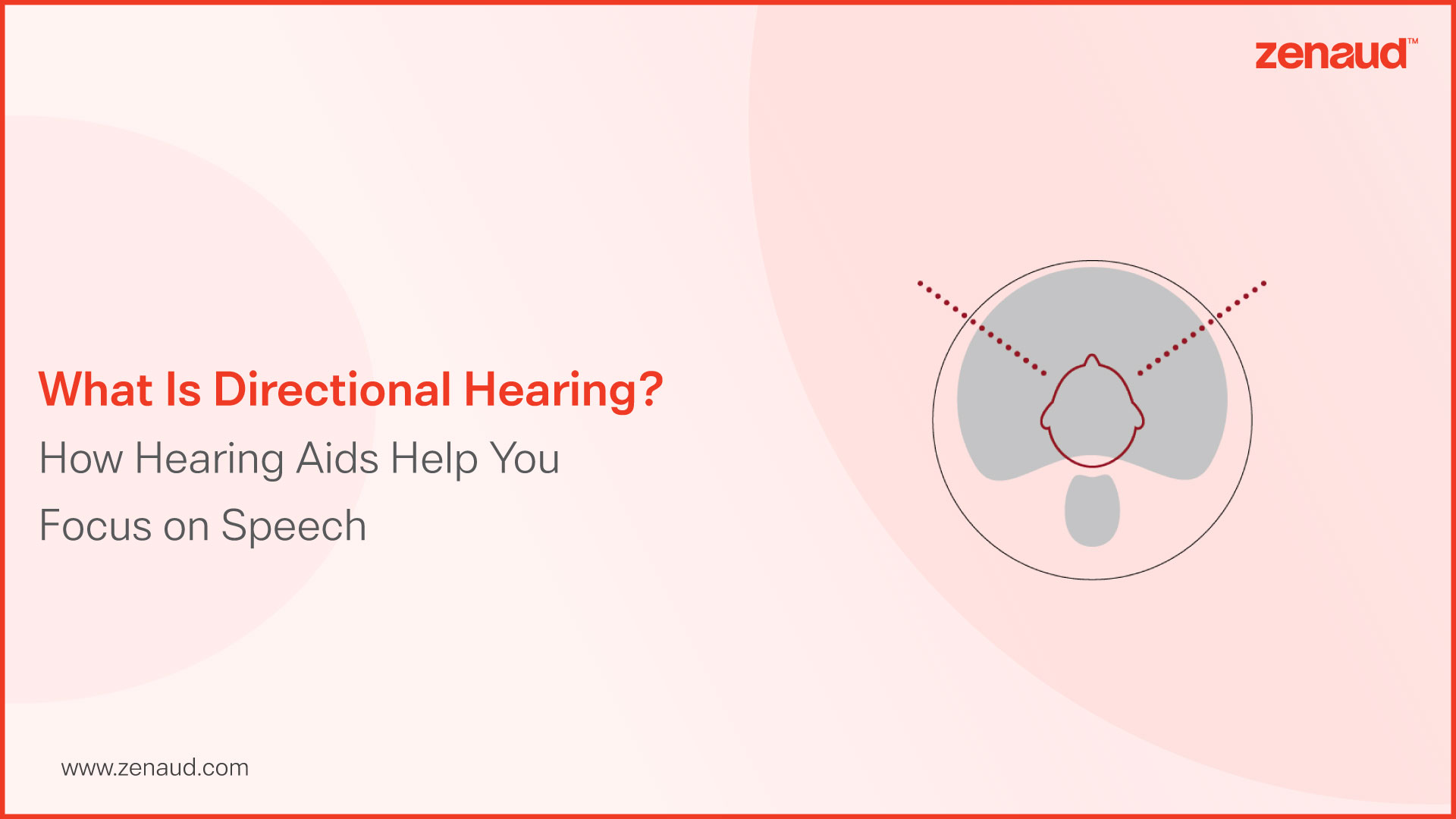
Consider a busy restaurant on a Saturday evening. The person across the table is speaking, but their voice competes with clinking cutlery, music and a dozen other conversations. Most people manage to follow along. Those with hearing loss often cannot, and the effort of trying leaves them exhausted. Directional hearing explains much of the difference. It is the ability to work out where a sound is coming from, which helps the listener concentrate on it while other sounds fade into the background. Modern hearing aids are built to support this ability.
Understanding Directional Hearing
Humans hear with two ears for a functional reason. A sound reaches one ear a fraction of a millisecond before the other, and at a slightly different volume. The brain reads these small differences and uses them to judge direction and distance. This is how a listener can pick out one voice in a crowded room, a skill commonly known as the cocktail party effect.
Hearing loss weakens the signals the brain depends on. Speech and background noise begin to blend together, and separating them takes real effort. Many people respond by avoiding gatherings, which can narrow their social lives over time.
How Directional Microphones Work
Many current hearing aids, particularly behind-the-ear and receiver-in-canal styles, carry two small microphones set a short distance apart. The processor compares what each one picks up and works out whether a sound comes from the front or from the sides and back.
Sound from the front is kept at full strength. Sound from other directions is reduced. Since people usually face whoever they are talking to, speech receives the advantage. Directional microphones in hearing aids work much like a spotlight on a stage, lighting up the speaker and leaving the surroundings in shadow.
Features That Support Speech Focus
Directionality seldom works alone. It is paired with other processing, and the following features are among the most helpful:
- Adaptive directionality: The focus shifts automatically when noise moves, so a passing scooter or a moving crowd does not pull your attention away.
- Environment detection: The device recognises a quiet room, a moving car or a crowded hall and changes its settings without being asked.
- Noise management: Hearing aid noise reduction softens constant background sounds such as fans and air conditioners.
- Wireless coordination: When worn as a pair, the two aids exchange information, which sharpens their sense of where sound originates.
Taken together, these show how far hearing aid microphone technology has come in recent years.
Where the Benefit Is Felt Most
The value of this technology is clearest in demanding settings. A family dinner with everyone talking at once is one. A table near a busy kitchen is another. Road noise during a car journey and echoing meeting rooms at work also qualify. In each of these, hearing aids in noisy environments use directional processing to keep the conversation in front of the wearer clearer and more comfortable. Many users report feeling less tired by evening, which is a meaningful benefit.
Setting Realistic Expectations
Directional systems reduce noise. They do not remove it. They perform best when the speaker is in front and the noise is behind or beside the listener. A voice coming from behind will benefit far less.
Safety also deserves attention. Because sounds from the rear are softened, wearers need to stay alert near traffic and other warning sounds. Many devices allow the focus to be made narrower or wider, and an audiologist can set this to suit your routine.
Choosing the Right Solution
Hearing loss differs from one person to the next, so the amount of directionality needed differs as well. A proper hearing assessment is the right starting point. It records the degree and pattern of loss and, where speech-in-noise testing is included, shows how much difficulty a person has with speech when noise is present. With those results, an audiologist can recommend suitable directional hearing aids and refine them over follow-up visits.
People who often struggle in social settings may wish to ask about speech focus hearing aids with adaptive features. Those who spend long hours in crowded places may benefit from hearing aids for speech in noise. Regular check-ups keep the settings aligned as needs change.
With the right fitting and realistic expectations, conversations can become far more manageable, and confidence often returns with them.
Ready for clearer conversations? Book a hearing consultation with Zenaud at zenaud.com.

Dattatreya M
Audiology Innovation Manager
Helping You Hear Life Again. At Hearzap, we believe hearing is the key to staying connected with family, friends, and the world around us. With over 48 years of trusted care & my 15 years in audiology, I’ve seen how improved hearing brings back confidence
Related Blogs
Ear Infection vs Earwax Blockage: How to Tell the Difference
By Sri Sai Koti Chennupati | Nov. 4, 2026
What Is Hidden Hearing Loss? Symptoms You Shouldn't Ignore
By Sri Sai Koti Chennupati | Sept. 21, 2026
Hearing Fatigue: Signs, Causes and How to Manage It
By Sharanya Krishnan - Audiologist | Sept. 16, 2026
Contact us
We are here for all your hearing needs, from hearing tests to hearing aids. Fill out the form below, and we will give you a call soon.
Recent Blogs
By Sri Sai Koti Chennupati | Nov. 4, 2026
By Team Zenaud | Nov. 2, 2026
By Team Zenaud | Oct. 29, 2026
By Team Zenaud | Oct. 27, 2026
By Dattatreya M | Oct. 26, 2026