Generic
Hearing Aids for Phone Calls: How to Get Clearer Conversations
By Team Zenaud | Oct. 27, 2026
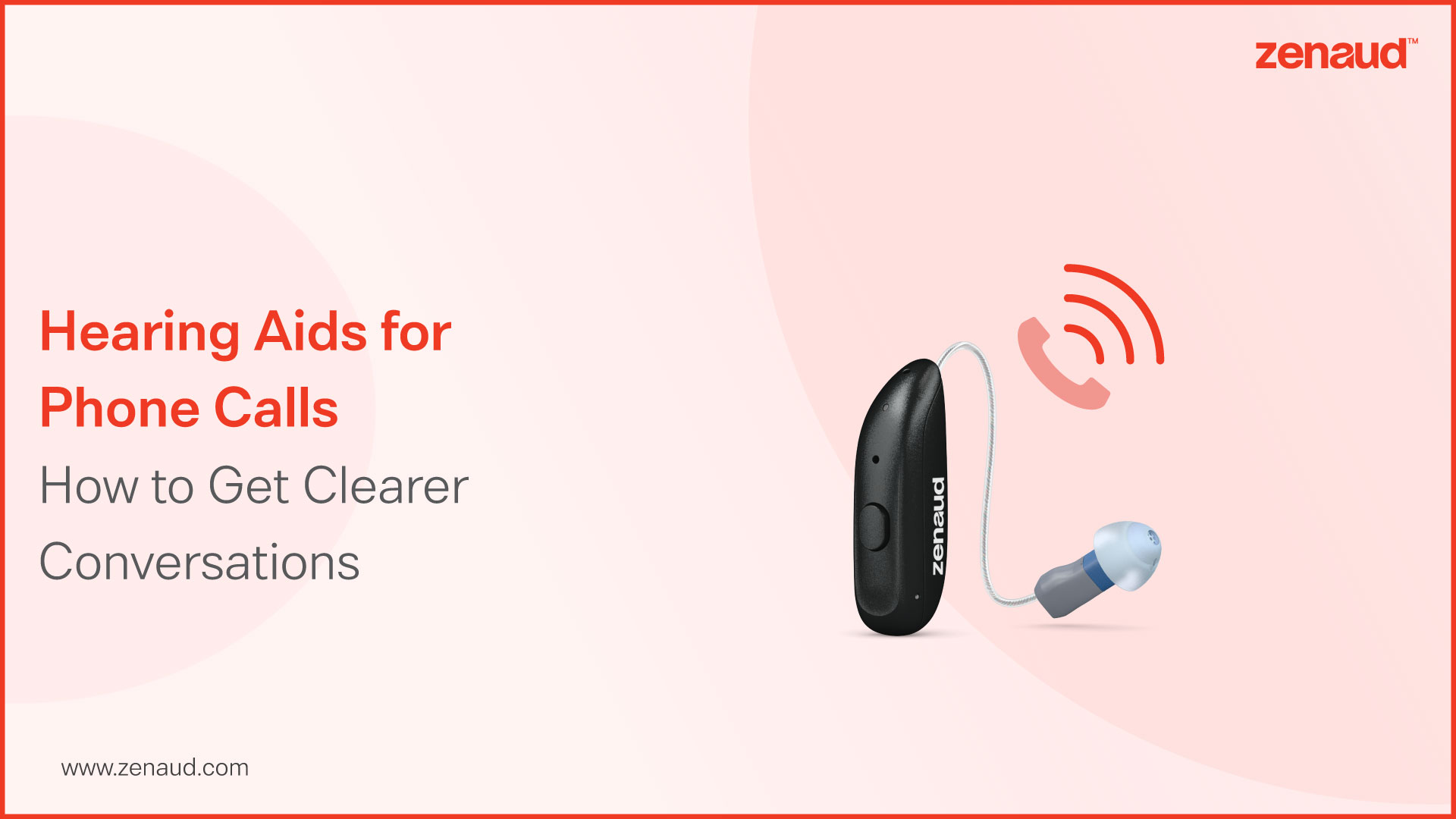
A phone call is a surprisingly demanding task for anyone with hearing loss. There is no face to watch and no expression to read. The voice itself often arrives thin and compressed, so the brain has to work harder to fill the gaps. Over a full day, this effort accumulates. Modern hearing technology has been designed with this very problem in mind.
Why Calls Are Harder Than Face-to-Face Conversation
Telephone audio carries a narrower range of frequencies than natural speech, and the missing detail often includes the high-pitched consonants that make words distinct. Visual cues disappear as well, which removes a support the brain quietly relies on. Noise in a busy room then competes with the caller's voice for attention. Acoustic feedback, heard as whistling, can also occur when a phone is held close to a hearing aid, and it often interrupts the conversation.
How Current Technology Helps
The most meaningful development is wireless audio. With hearing aid streaming, the caller's voice travels from the phone directly into the devices, so the sound is not affected by the surrounding room. The result is steadier audio and considerably less interference. This direct route is largely why hearing aid call clarity has improved so much in recent years. Bluetooth hearing aids for phone calls usually need to be paired only once. After that, they reconnect automatically whenever the phone and the devices are switched on. In most models, the voice reaches both ears together, which lowers listening effort. Several models also use their own microphones to pick up the wearer's voice, allowing hands-free calls, although some rely on the phone's microphone instead.
Compatibility With Your Phone
Not every device works with every phone, so it is advisable to confirm compatibility before purchase. Hearing aid compatibility with smartphones depends on the wireless standard involved. Certain models connect directly to iPhones through Apple's own protocol. Others work with Android handsets through the ASHA standard. Newer devices are beginning to adopt Bluetooth LE Audio, which is expected to extend support to a wider range of phones. Software matters too. Keeping both the phone and the hearing aid firmware updated helps maintain a stable connection. Anyone considering hearing aids for mobile phones should bring their exact handset model to the audiologist, so that pairing can be tested in person.
Features That Require for Everyday Calling
When comparing options, the following features tend to make the greatest difference:
- Direct streaming to both ears
- Hands-free voice pickup
- A companion app for adjusting volume and programmes during a call
- Rechargeable batteries that last through long conversations
- Reliable noise management in busy places
Those who mainly want hearing aids for smartphone calls will generally find that hearing aids with Bluetooth offer the most dependable experience, since the phone no longer needs to be held against the ear.
Habits That Support Better Calls
Even the best device benefits from supportive habits:
- Move to a quieter space before answering, when possible.
- Set the phone volume at a comfortable level, then adjust the hearing aid volume separately.
- Choose video calls or live captions where available, since they restore the visual cues.
- If your devices do not stream, hold the phone speaker close to the hearing aid microphone without pressing it firmly against the ear, which helps prevent feedback.
- Attend regular check-ups so that the programming remains suited to your hearing.
Conclusion
Every person's hearing needs are different. The right device depends on the degree of hearing loss, daily routine, budget, and the phone in use. Rather than searching for the single best hearing aids for phone calls, it is more useful to book a professional assessment and test call performance first-hand. This is the most reliable way to match the technology to the individual. Ready for clearer calls? Visit zenaud.com to explore our hearing solutions and book a consultation with our experts.
Contact us
We are here for all your hearing needs, from hearing tests to hearing aids. Fill out the form below, and we will give you a call soon.
Recent Blogs
By Dattatreya M | Oct. 26, 2026
By Team Zenaud | Oct. 23, 2026
By Team Zenaud | Oct. 12, 2026
By Team Zenaud | Oct. 6, 2026
By Sharanya Krishnan - Audiologist | Oct. 3, 2026