HEARING TEST
Real Ear Measurement (REM) Test: Why Is It Important for Hearing Aid Fitting?
By Dattatreya M | Oct. 26, 2026
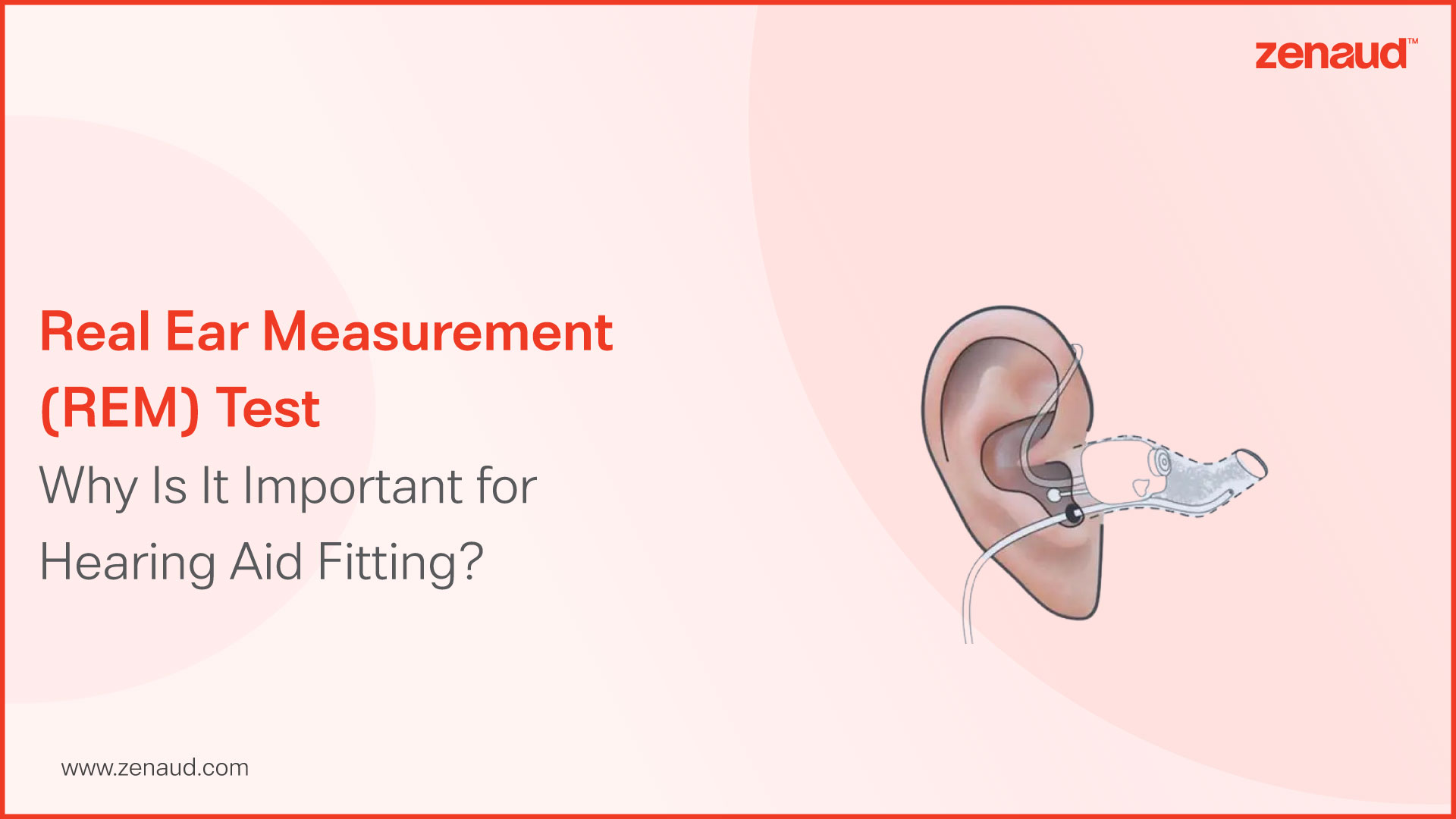
Many people leave their appointment with a new hearing aid, find it comfortable, notice a few sounds more clearly and assume the process is complete. This is frequently not the case. A device can feel pleasant and still deliver the wrong amount of sound at the wrong frequencies. The real ear measurement test exists to settle that question with objective data rather than assumption.
Understanding the Procedure
In this test, a fine, flexible tube is placed in the ear canal, a short distance from the eardrum. The tube is connected to a small microphone that records the sound actually reaching that point while the hearing aid is in use. Ear canals differ considerably in length, width and shape, so the same device can behave quite differently from one person to the next. Real ear measurement in audiology is designed to account for that variation instead of depending on averages.
Limitations of Default Settings
Fitting software begins with an estimate based on an average ear, and few real ears match it. Children, people with narrow canals and those who wear custom earmoulds tend to show the widest gap between predicted and delivered sound. When that gap is not measured, the effects are easy to recognise. Speech may remain faint at the frequencies that give words their clarity, while other sounds become sharp and tiring. The wearer may conclude that the hearing aid is ineffective, when the settings were never matched to the ear in the first place.
Steps Involved
The test is painless and is usually completed within a single visit.
- The audiologist checks if the ear canal is free of wax.
- The probe tube is placed at a measured depth near the eardrum.
- A test sound is played, and the natural response of the ear is recorded.
- The hearing aid is fitted, and the same sound is repeated.
- The result is compared against a target calculated from the audiogram.
- Settings are adjusted until the output closely follows that target.
Benefits for the Wearer
Once the output matches the target, quieter speech becomes easier to follow, and louder sounds remain within a comfortable range. Listening is also less tiring across a long day. Hearing aid fitting accuracy improves, which means the device performs as intended from the first week and fewer return visits are often needed. Wearers who experience this difference may be more likely to use their devices consistently.
The Role of Verification
Professional audiology bodies regard probe microphone measurement as best practice. Hearing aid verification of this kind provides objective figures, whereas a wearer's report that everything sounds fine can conceal shortfalls. Programming based on measurement is more dependable than programming based on prediction. The benefit extends to later appointments as well. Hearing changes with time, and a recorded baseline makes any future hearing aid adjustment quicker and more precise.
Common Misconceptions
A few mistaken beliefs discourage people from asking for this test.
- It is uncomfortable. The tube is very thin and soft, and most people feel only a slight sense of something in the ear.
- Software is enough. It offers a useful starting point, but it cannot fully reflect the acoustics of an individual ear.
- It is only for severe loss. Mild and moderate hearing loss also benefit, since accurate amplification matters at every level.
What to Ask at Your Appointment
Before accepting a new device, it is reasonable to ask whether an ear measurement will be part of your fitting. In a well-conducted audiologist hearing aid fitting, it should be a routine step rather than an optional extra. You may also ask to view the results on screen, which helps you understand how the device has been matched to your hearing.
Final Thoughts
A hearing aid is a considered investment in communication, relationships and overall wellbeing. Measuring the sound that truly reaches the eardrum is the most reliable way to protect that investment, and a fitting that has been verified is one you can trust. Ready for a hearing aid fitting that is measured, not assumed? Visit zenaud.com to book your consultation today.

Dattatreya M
Audiology Innovation Manager
Related Blogs

How Hearing Loss Can Affect Communication in Relationships
By Sharanya Krishnan - Audiologist | Oct. 3, 2026
Hearing Fatigue: Signs, Causes and How to Manage It
By Sharanya Krishnan - Audiologist | Sept. 16, 2026
Speech Audiometry Test: Purpose, Procedure & Results Explained
By Sri Sai Koti Chennupati | Aug. 13, 2026
Contact us
We are here for all your hearing needs, from hearing tests to hearing aids. Fill out the form below, and we will give you a call soon.
Recent Blogs
By Team Zenaud | Oct. 23, 2026
By Team Zenaud | Oct. 12, 2026
By Team Zenaud | Oct. 6, 2026
By Sharanya Krishnan - Audiologist | Oct. 3, 2026
By Dattatreya M | Sept. 30, 2026