Generic
What Is Adaptive Sound Processing in Hearing Aids?
By Team Zenaud | Nov. 9, 2026
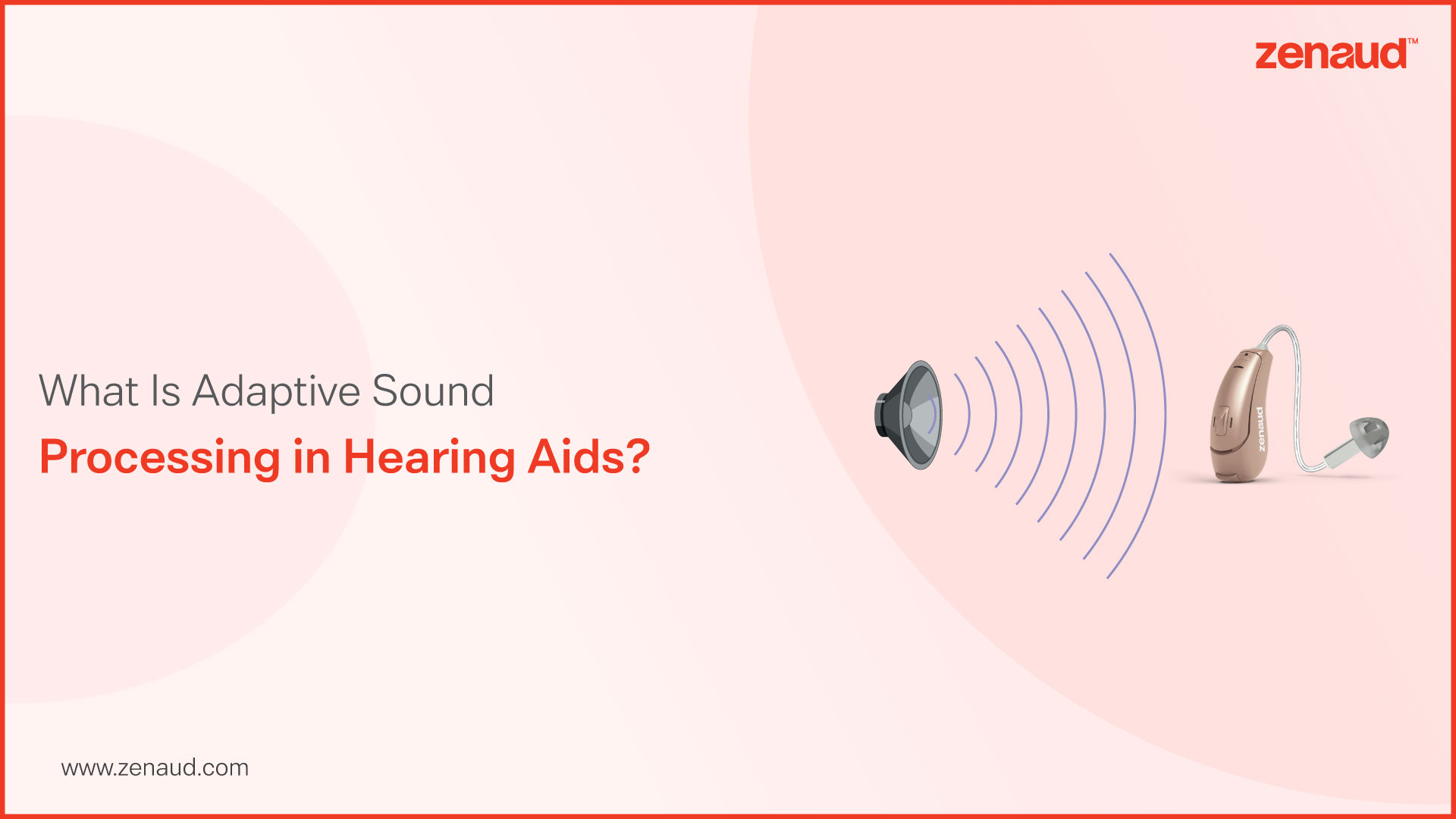
Many people notice the same thing after their first fitting. The aids perform well in the audiologist's quiet room, but conversation becomes difficult to follow once they enter a busy restaurant. Everyday surroundings vary widely, from quiet rooms to crowded streets. Sound changes from one minute to the next, and a device that cannot follow those changes will continue to underperform. Adaptive sound processing in hearing aids was developed to address exactly this problem.
Understanding the Concept
The principle is straightforward. A hearing aid continuously analyses the sound around it and adjusts its settings to suit what it detects. Speech is given priority, and distracting noise is reduced. Little or no manual input is required, which is particularly valuable to those who find small controls difficult to use.
The Technology Behind the Process
Most modern devices follow broadly the same path. A microphone picks up sound, a chip converts it to digital form, and a processor refines it before the receiver delivers it to the ear. Digital hearing aid processing allows all of this to happen almost instantly. Within that chain, hearing aid signal processing handles several tasks together:
- Environment classification, which recognises whether the setting is quiet, windy, noisy or musical
- Noise reduction, which lowers steady background sounds such as fans or traffic
- Directional focus, which turns the microphones towards a speaker in front of the wearer
- Feedback management, which suppresses whistling before it becomes noticeable
- Compression, so that soft sounds stay audible and loud ones stay comfortable
Automatic Adjustments in Everyday Life
Consider someone leaving a calm living room for a crowded street. An older, basic device would need a manual change to cope. With adaptive hearing aids, the change in surroundings is detected automatically. Wind and traffic noise are reduced, while the voice of the person walking alongside remains clear. Wearers often report that they barely notice the transition. These hearing aid automatic adjustments work quietly in the background.
Performance Across Different Settings
Hearing aids for different environments must meet very different demands, and the processing responds accordingly.
- Restaurants and gatherings: Speech is emphasised while surrounding chatter is reduced, although very busy rooms remain challenging.
- Outdoors: Wind noise is reduced so that it interferes less with conversation.
- Quiet homes: Processing stays minimal, so that everyday sounds remain natural.
- Music and television: A wider range of sound is preserved for fuller listening.
The Role of Learning Features
Some newer models go a step further. Smart hearing aid technology can record how a wearer adjusts the volume in particular places, and over a few weeks it begins to apply those preferences automatically. This form of adaptive sound technology makes the device feel less like a standard product and more like one made for the individual.
Who Benefits Most
People with busy routines tend to gain the most, particularly those who move between very different surroundings in a single day. First-time users also benefit, since fewer controls mean less to learn. Older adults often value simplicity for the same reason.
However, technology alone is not sufficient. Good hearing aid sound processing still depends on a careful fitting by a qualified audiologist, programmed to the individual's hearing profile. Follow-up visits allow fine-tuning as needs change over time.
Practical Points Before Choosing
- Ask for a demonstration in realistic, noisy conditions rather than in a silent room
- Enquire how many listening situations the device can recognise
- Confirm that follow-up adjustments are included after the first fitting
- Consider battery life, since continuous processing draws more power
Conclusion
Adaptive sound processing in hearing aids has changed what wearers can reasonably expect. Clear speech, comfortable listening and fewer manual controls are now within reach for those who choose well and are fitted with care. If your current device struggles outside the centre, an assessment of adaptive options is a sensible next step.
Ready to experience clearer, more comfortable hearing? Visit zenaud.com to explore hearing care solutions suited to your lifestyle.
Related Blogs
What Is Directional Hearing? How Hearing Aids Help You Focus on Speech
By Dattatreya M | Nov. 6, 2026
AI Hearing Aids vs Traditional Hearing Aids: What's the Difference?
By Sri Sai Koti Chennupati | Sept. 24, 2026
Hearing Loss and Sleep: Can Poor Sleep Affect Your Hearing?
By Sri Sai Koti Chennupati | Sept. 10, 2026
Contact us
We are here for all your hearing needs, from hearing tests to hearing aids. Fill out the form below, and we will give you a call soon.
Recent Blogs
By Dattatreya M | Nov. 6, 2026
By Sri Sai Koti Chennupati | Nov. 4, 2026
By Team Zenaud | Nov. 2, 2026
By Team Zenaud | Oct. 29, 2026
By Team Zenaud | Oct. 27, 2026