HEARING AIDS
Rechargeable vs Bluetooth Hearing Aids: Which One Should You Choose?
By Team Zenaud | May 28, 2026
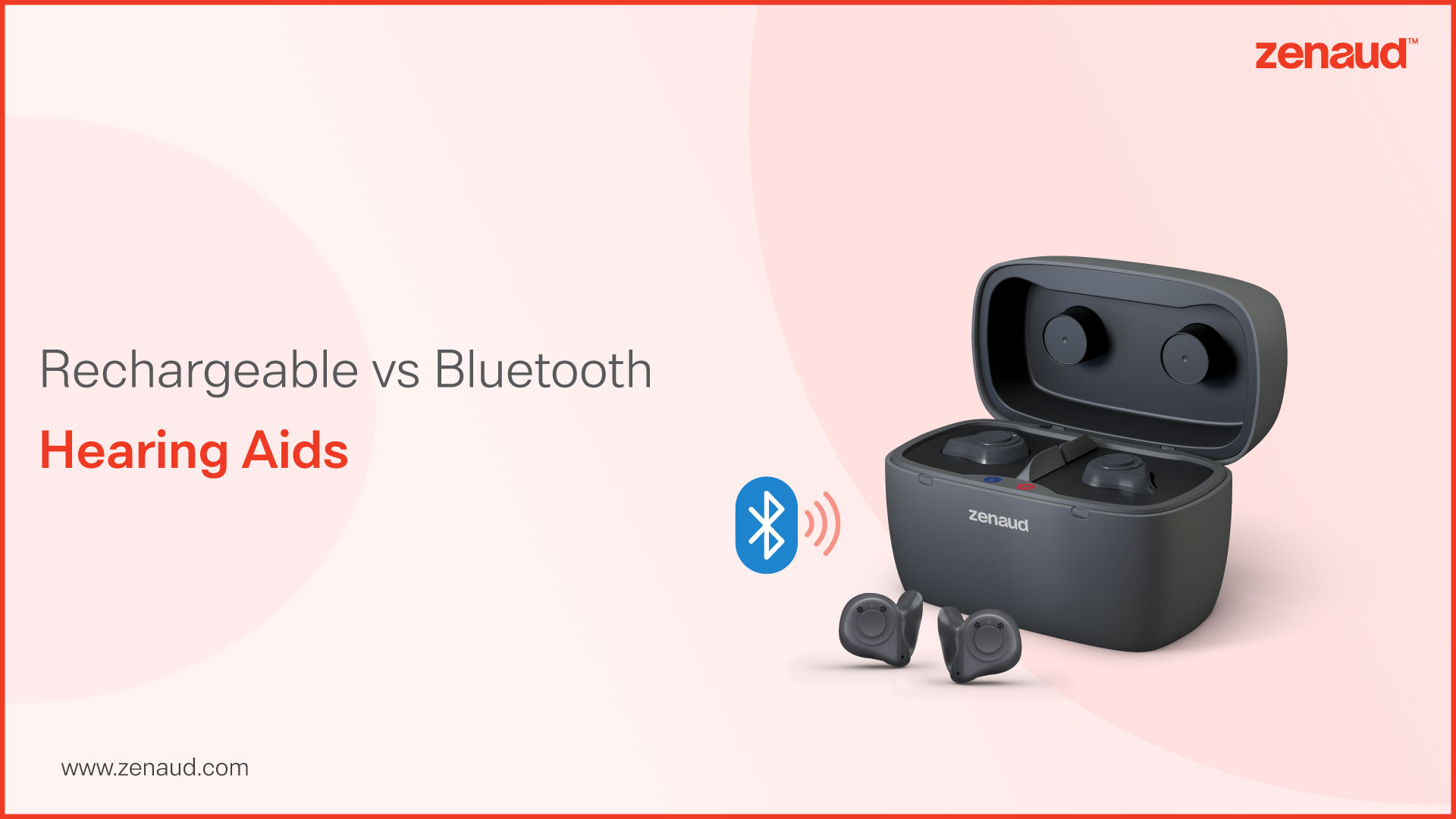
It is one of the most common questions that comes up in hearing aid consultations right now. Not which brand to choose or which style fits best, but something more fundamental: do you go rechargeable, do you go Bluetooth, or is there a way to get both? The short answer is that these are not mutually exclusive categories. But understanding what each term actually means, and what it means for your daily life, makes the decision considerably easier.
What the Labels Actually Mean
The confusion starts with how these terms get used. Rechargeable and Bluetooth describe two different features of a hearing aid, not two different types of device. A hearing aid can be rechargeable without having Bluetooth. It can have Bluetooth and still use disposable batteries. And increasingly, the best hearing aids on the market offer both as standard, because the two features address entirely different aspects of the wearing experience.
Rechargeable hearing aids refers to the power source. Instead of tiny disposable zinc-air batteries that need replacing every three to seven days, rechargeable devices use lithium-ion technology that charges overnight in a compact case, much like a pair of wireless earbuds. A full charge typically powers a complete day of use, including several hours of streaming.
Bluetooth hearing aids refers to connectivity. These are devices capable of wirelessly pairing with smartphones, televisions, laptops, and other audio sources to stream sound directly into both ears. Some use standard Bluetooth protocols. Others use proprietary low-energy versions developed specifically for hearing aids to reduce battery drain and improve connection stability.
The Case for Rechargeable Hearing Aids
For many people, the move to rechargeable hearing aids is less about technology and more about practicality. Replacing tiny batteries every few days is genuinely difficult for anyone with reduced dexterity, whether from arthritis, age, or neurological conditions. Dropping a battery the size of a shirt button on a kitchen floor is a particular kind of frustration that hearing aid users will recognise immediately.
Beyond convenience, rechargeable technology has matured to the point where it is genuinely reliable. Early versions struggled to hold charge through a full day of demanding use. Current lithium-ion cells in modern hearing aids deliver consistent performance across varied listening conditions, and many charging cases now include backup power for an additional charge or two when a plug socket is not available.
For parents fitting hearing aids in children, rechargeable options also eliminate the safety concern of small batteries in the home entirely.
The Case for Bluetooth Hearing Aids
Bluetooth hearing aids solve a problem that amplification alone cannot: delivering sound from external devices cleanly and directly into the ear without background interference. Phone calls streamed directly to both hearing aids are transformative for people who previously struggled with handsets. Television audio delivered straight into the ear at a personalised volume, without the set being turned up to a level that clears the room, restores something that many hearing aid users had quietly given up on.
Smart hearing aids with full Bluetooth integration also allow companion app control, letting wearers adjust volume, switch listening programmes, and fine-tune settings discreetly from a smartphone without touching the devices. For people in professional environments where reaching up to adjust a hearing aid would feel conspicuous, this matters more than it might initially seem.
The connectivity ecosystem around smart hearing aids continues to expand. Integration with smart home devices, real-time language translation features, and remote fine-tuning by audiologists via app-based platforms are all part of what Bluetooth connectivity now enables.
Rechargeable vs Bluetooth Hearing Aids: Making the Decision
When weighing rechargeable vs Bluetooth hearing aids, the most useful reframe is to stop thinking of them as competing options and start thinking about which combination of features matches your specific lifestyle.
If your primary frustration is battery management, start with rechargeable as a non-negotiable. If your primary challenge is phone communication, television audio, or connectivity with devices, Bluetooth capability belongs at the top of your list. If both apply, and for most active adults they do, the good news is that best hearing aids at mid-range and premium tiers now routinely offer both features together.
The questions worth asking your audiologist are practical ones. How long does the battery last under your typical daily usage? Which smartphones and devices are confirmed compatible with the hearing aids being recommended? Does the charging case offer any backup power capacity? Is the Bluetooth connection stable across the specific devices you use most?
These are not technical questions that require an engineering background to ask. They are the same questions you would ask about any device that is going to be part of your daily life for the next five to seven years.
What Modern Hearing Aids Can Actually Do
It is worth stepping back for a moment to appreciate how far modern hearing aids have come, because the gap between public perception and clinical reality is still significant. Many people making their first hearing aid decision are working from assumptions formed years ago, when devices were larger, less capable, and considerably less connected.
Contemporary hearing aids are sophisticated instruments that process sound with artificial intelligence, adapt automatically to changing environments, monitor health metrics, and integrate seamlessly with the digital devices that most people use every day. The rechargeable versus Bluetooth conversation is just one small part of a much larger picture of what is now possible.
At Zenaud, we stay current with every development in hearing aid technology because our patients deserve recommendations based on what exists today, not what existed five years ago. Every fitting conversation we have starts with understanding the person, their hearing profile, their daily routine, and their priorities, before any device recommendation is made.
Unsure which hearing aids are right for your lifestyle? Book a free consultation with Zenaud today.
FAQs
Which hearing aid is better rechargeable or Bluetooth?
Rechargeable and Bluetooth hearing aids serve different needs, but many modern devices now combine both features.
Benefits of Bluetooth hearing aids?
Bluetooth hearing aids allow direct streaming of calls, music, and TV audio with better convenience and clarity.
Rechargeable hearing aids in India?
Rechargeable hearing aids in India offer easy charging, long battery life, and hassle-free daily use.
Best Bluetooth hearing aids for seniors?
The best Bluetooth hearing aids for seniors provide clear sound, easy controls, comfort, and smartphone connectivity.
Contact us
We are here for all your hearing needs, from hearing tests to hearing aids. Fill out the form below, and we will give you a call soon.
Recent Blogs
By Sharanya Krishnan - Audiologist | Aug. 25, 2026
By Dattatreya M | Aug. 20, 2026
By Sri Sai Koti Chennupati | Aug. 17, 2026
By Sri Sai Koti Chennupati | Aug. 13, 2026
By Sri Sai Koti Chennupati | Aug. 11, 2026
