HEARING AIDS
Rechargeable Hearing Aids
By Team Zenaud | Jan. 31, 2026
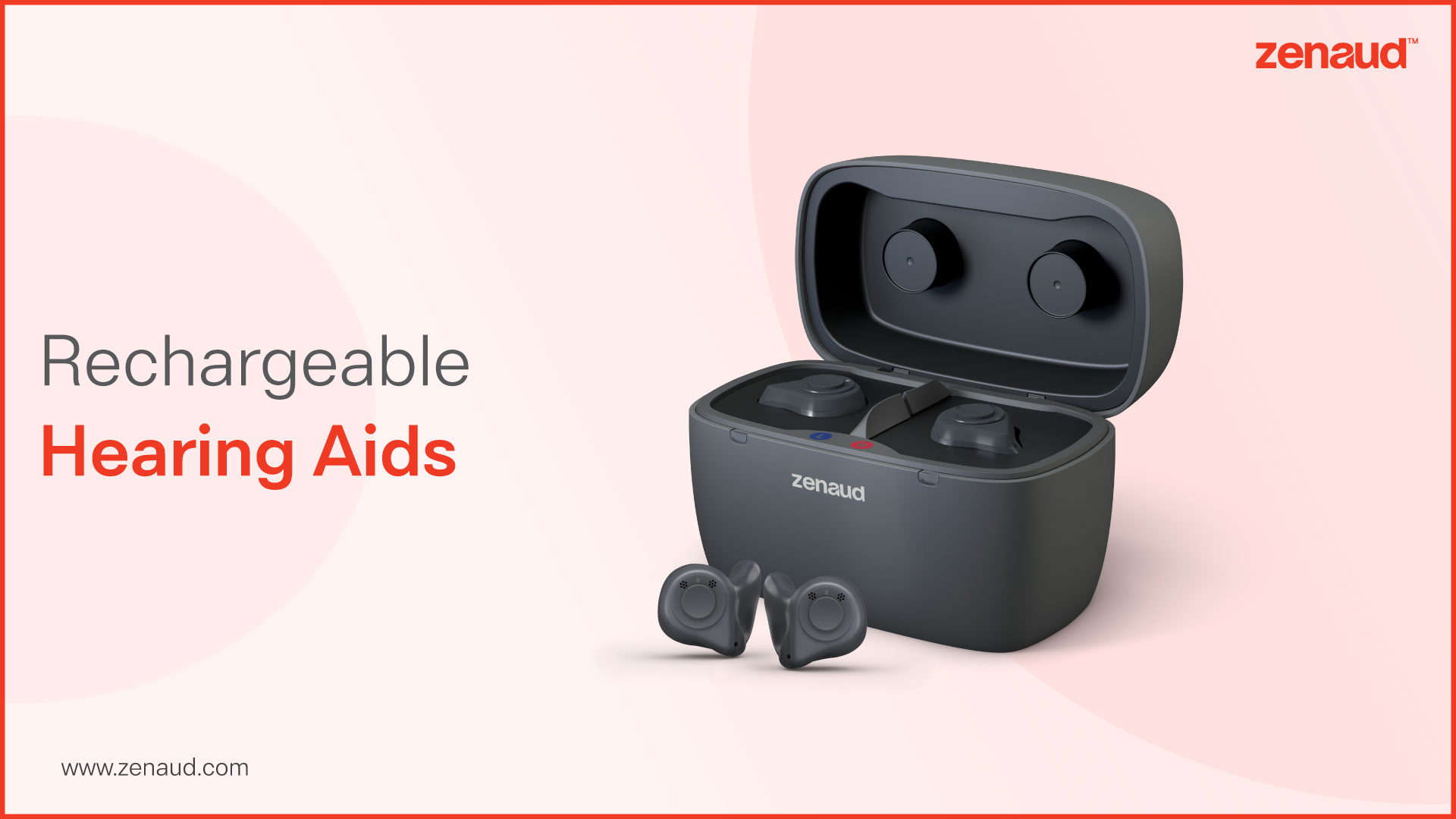
Rechargeable Hearing Aids: Simple Hearing That Fits Modern Life
If you wear hearing aids or are thinking about getting one, there’s a good chance you’ve worried about batteries or tiny cells that are easy to lose or sudden beeping when the battery dies.
This is where rechargeable hearing aids have quietly changed the experience of hearing care. They remove one small but constant stress and replace it with something far simpler — charge, wear, and go about your day.
Let’s break down what rechargeable hearing aids are, how they work, what they cost, and whether they’re right for you.
What Are Rechargeable Hearing Aids?
Rechargeable hearing aids function as hearing devices which contain internal batteries that users can recharge through their charging case or dock. The same process applies to smartphones and wireless earbuds, which users can charge through their respective charging systems.
The product allows you to recharge your hearing aids every night through the charger instead of needing to change disposable batteries multiple times throughout the week. The hearing aids reach full power after charging overnight which provides you with a whole day of hearing assistance.
The small change enables many people to experience hearing aids as common technology rather than medical equipment.
How Rechargeable Hearing Aids Work
The operation of rechargeable hearing aids depends on their internal hearing aid batteries, which use lithium-ion technology to power their functions. The batteries serve their purpose throughout their intended lifespan because they have been engineered to maintain safe performance under continuous usage.
The charging process requires several hours to complete which results in listening time between 18 and 30 hours depending on the specific model and its Bluetooth streaming capabilities.
The majority of chargers have a compact design which enables users to charge their hearing aids by simply placing them into the designated slots for automatic charging.
Why More People Are Choosing Rechargeable Hearing Aids
People often don’t realise how much effort battery changes take until they stop doing them.
Here’s why rechargeable models are becoming so popular:
- No more changing tiny batteries
- No sudden battery failure during conversations
- Easier to manage for seniors or people with dexterity issues
- More environmentally friendly than disposable batteries
- Consistent power throughout the day
For many users, rechargeable hearing aids simply make life easier — and that matters more than people expect.
Rechargeable Hearing Aid Batteries: What You Should Know
Modern rechargeable hearing aid batteries are designed to last several years before needing replacement. In most cases, they’re built into the device and replaced by a professional when needed.
Unlike disposable batteries, they don’t lose power gradually in unpredictable ways. You get stable performance all day, with clear indicators when charging is needed.
This reliability is one of the biggest reasons people feel more confident using rechargeable hearing aids in social or work settings.
Rechargeable Hearing Aid Price in India
One of the most common things people discuss while considering rechargeable hearing aids is the cost. Prices for rechargeable hearing aids in India are determined by brand, technology level, and given features.
Would you believe that they go up to ₹3,50,000 per ear, with prices commencing from ₹ 40,000? This pricing can be broken up for you as follows:
A) Basic rechargeable models (₹40,000 – ₹70,000):
These serve the purpose of mild hearing loss in low environments.
B) Mid-range rechargeable hearing aids (₹70,000 – ₹1,50,000):
Increased sound clarity, noise reduction, and daily comfort.
C) Premium-range rechargeable hearing aids (₹1,50,000 – ₹3,50,000+):
These are able to process advanced sounds, can link with Bluetooth, app control, and have a fast charge.
While comparing pricing of rechargeable hearing aids, always keep in mind that a higher cost will get you better sound processing, a longer battery life, and professional support for which you are willing to pay service charges.
Are Rechargeable Hearing Aids Reliable for Daily Use?
Yes — and for many people, they’re more reliable than battery-operated models.
Because rechargeable hearing aids are designed to deliver consistent power throughout the day, users don’t experience sudden drops in performance. Most devices also provide alerts when battery levels are low, giving you time to recharge.
For people who use hearing aids for long hours — workdays, social events, or travel — this reliability is a major advantage.
Who Are These Rechargeable Hearing Aids For?
Rechargeable hearing aids are a great option for:
- Seniors who find battery changes difficult
- People with arthritis or reduced finger strength
- Active users who wear hearing aids all day
- Anyone who prefers low-maintenance technology
- Environmentally conscious users
They may not be ideal for people who don’t have regular access to electricity, but for most users, charging once a day fits easily into a routine.
What About Travel and Power Cuts?
Most chargers are compact and travel-friendly. Some premium models come with portable charging cases that hold multiple charges, allowing you to recharge even without plugging in immediately.
During power cuts, many users simply charge their hearing aids earlier in the day or use portable power banks — just like they would for a phone.
With a little planning, rechargeable hearing aids fit seamlessly into travel and daily life.
Rechargeable vs Battery Hearing Aids
Both options work well, but the difference comes down to convenience.
Disposable battery hearing aids require regular battery changes and keeping spares handy. Rechargeable models remove that step entirely.
People who switch to rechargeable hearing aids often say they didn’t realise how much mental effort battery management took until it was gone.
Final Thoughts
Rechargeable Hearing Aids aren’t just a trend — they’re a response to how people actually live today. Ease of setup, no fuss, and technology simply working effortlessly in the background.
Rechargeable hearing aid price in India are somewhat higher than batteries in the simpler models but their modern, cutting-edge feel and relaxation should make it worth the expense.
So if the result is setting up a hearing aid that feels as modern, practical, and stress free as possible, this is in itself a thumbs up in favor of selecting the rechargeable version. Sometimes, hearing better is not about adding more but about removing small frustrations that make a lot of difference.
FAQs
1. What are the best rechargeable hearing aids?
The best rechargeable hearing aids for your needs will depend on your particular hearing needs and your personal lifestyle requirements which need hearing aids with battery life that lasts through the day, advanced sound processing abilities and comfortable features for everyday use.
2. Are rechargeable hearing aids better?
For many people, rechargeable hearing aids are better because they save the hassle of changing batteries and offer consistent power throughout the day.
3. Can hearing aids be rechargeable?
Yes — many modern hearing aids are designed to be rechargeable, allowing you to simply charge them overnight like your phone.
4. What is the lifespan of rechargeable hearing aids?
Rechargeable hearing aids provide multiple years of service because their internal batteries can sustain daily operation for approximately three to seven years before they require replacement.
Contact us
We are here for all your hearing needs, from hearing tests to hearing aids. Fill out the form below, and we will give you a call soon.
Recent Blogs
By Team Zenaud | Oct. 12, 2026
By Team Zenaud | Oct. 6, 2026
By Sharanya Krishnan - Audiologist | Oct. 3, 2026
By Dattatreya M | Sept. 30, 2026
By Sri Sai Koti Chennupati | Sept. 28, 2026