HEARING LOSS
Bilateral Hearing Loss: Hearing Loss in Both Ears
By Team Zenaud | March 31, 2026
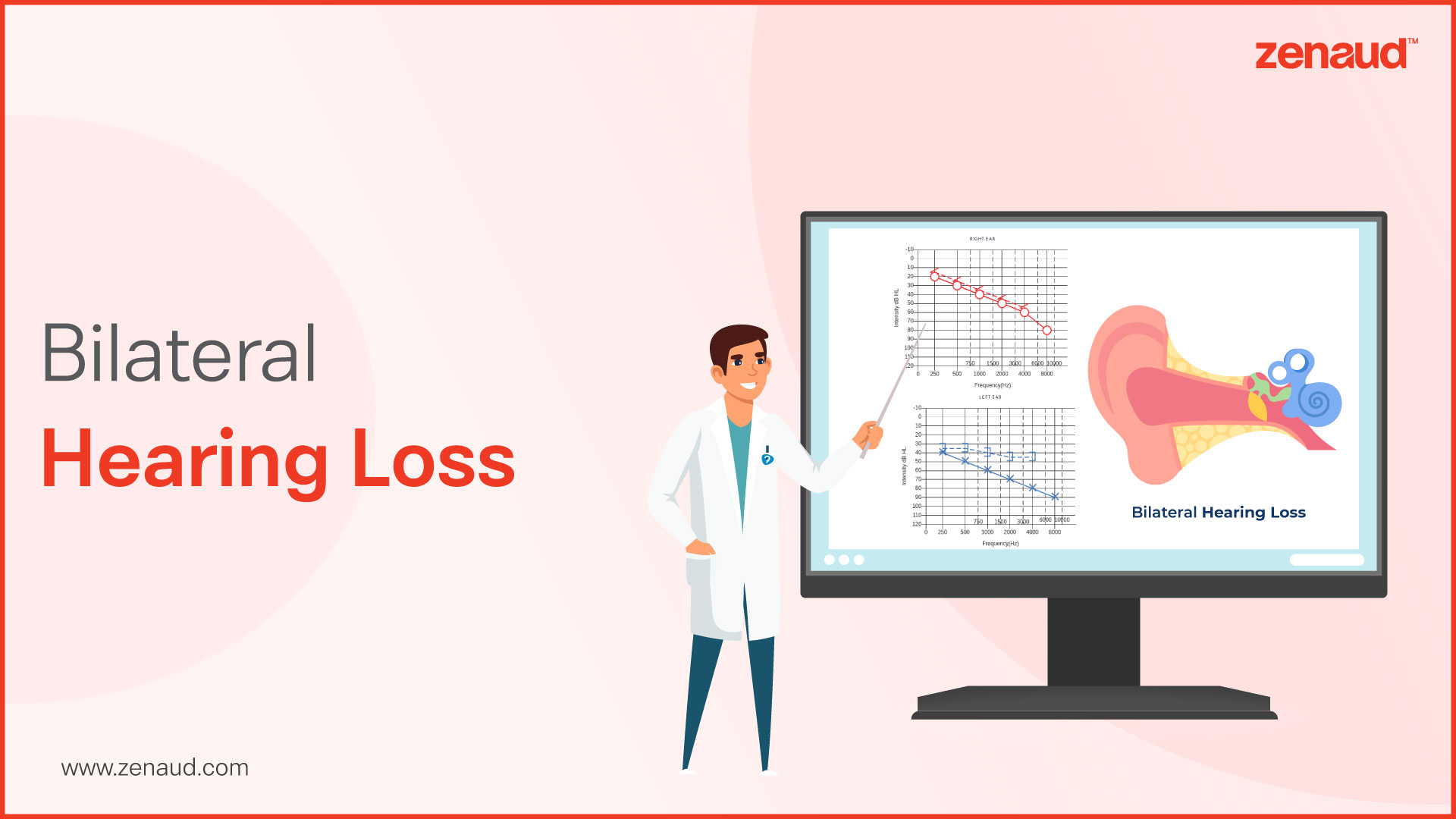
Hearing Loss in Both Ears: What Bilateral Hearing Loss Really Means for You
Most people assume hearing loss happens gradually, quietly, and usually to someone else. The reality is far more common and far more varied than that. When hearing deteriorates in both ears simultaneously, it carries its own set of causes, classifications, and consequences that are worth understanding clearly.
Bilateral hearing loss is not a single condition. It is a broad clinical category that spans everything from mild difficulty following conversations in noisy rooms to a complete inability to perceive sound without amplification. Where someone falls on that spectrum shapes everything, from the treatment options available to the daily accommodations that become necessary.
What Does Bilateral Mean, and Why Does It Matter?
The word bilateral simply means both sides. In the context of hearing, it means that both ears are affected. One ear may be significantly worse than the other, or the loss may be roughly symmetrical. Either way, the involvement of both ears changes the clinical picture considerably.
Hearing with two ears is not simply about volume. It is about spatial awareness, sound localisation, and the brain's ability to filter noise. When both ears are compromised, the brain loses much of its ability to triangulate where sound is coming from, to separate speech from background noise, and to maintain the kind of effortless listening that most of us take for granted. Fatigue, social withdrawal, and cognitive strain often follow. Not because a person is struggling emotionally, but because the brain is working significantly harder than it should have to.
The Most Common Type: Sensorineural Hearing Loss
The inner ear and the auditory nerve are responsible for converting sound vibrations into the electrical signals the brain interprets as hearing. When damage occurs here rather than in the ear canal or middle ear, it results in sensorineural hearing loss. When this affects both ears, clinicians diagnose bilateral sensorineural hearing loss, one of the most frequently encountered forms of permanent hearing impairment worldwide.
For healthcare professionals and audiologists working within medical coding systems, documentation matters. Bilateral sensorineural hearing loss ICD 10 is coded under H90.3, the specific classification used to record this diagnosis in medical records, referral letters, and insurance documentation. You may also encounter the reverse phrasing in clinical correspondence: sensorineural hearing loss bilateral ICD 10 refers to the same code, simply worded differently. Understanding this helps patients make sense of paperwork and communicate more effectively with healthcare providers.
Causes: Why Hearing Loss In Both Ears Happens?
Unlike single-ear hearing loss, which is often tied to a localised event (viral infection, acoustic trauma, or vascular issue affecting one side) bilateral hearing loss typically points to systemic causes. The most common among them is age-related hearing loss, known as presbycusis, which almost always affects both ears progressively over time.
Prolonged noise exposure is the other major driver. Whether from occupational environments, years of listening through headphones at high volume, or repeated attendance at loud events, noise-induced damage accumulates in both cochleae simultaneously. Genetic factors play a significant role as well, particularly in children and young adults with no obvious environmental cause.
Certain medications called ototoxic drugs are known to damage inner ear hair cells bilaterally. These include some chemotherapy agents, high-dose loop diuretics, and specific antibiotics. Autoimmune inner ear disease, Ménière's disease affecting both ears, and systemic conditions such as diabetes and hypothyroidism round out the list of less common but clinically important causes.
Understanding the Spectrum: From Minimal to Profound
Bilateral hearing loss does not look the same in every person. At the gentler end sits bilateral minimal hearing loss, a category that often goes undiagnosed precisely because the difficulties it creates are subtle. Struggling to follow group conversations, mishearing words in quiet settings, or asking people to repeat themselves slightly more than feels normal are all early indicators. In children, minimal bilateral loss can significantly affect speech development and academic performance even when it appears mild on paper.
At the other extreme is bilateral profound hearing loss, a level of impairment where even the loudest sounds are either inaudible or perceived only as vibration without clarity. This is the category most associated with sign language use, cochlear implantation, and specialist educational support. Between these two poles lies a spectrum of moderate and severe losses, each with its own functional implications and intervention options.
Treatment and Management
The good news is that bilateral hearing loss is manageable. The most effective treatment for most cases of sensorineural hearing loss remains hearing aids which also serve as the most accessible treatment option. Modern bilateral fittings support wireless communication between their devices which enables users to experience binaural processing that resembles natural brain function while handling spatial sound detection which is normally lost through bilateral hearing impairment.
Cochlear implants serve as a better solution for profound hearing loss cases when hearing aids do not provide sufficient help because they create a direct connection to the auditory nerve through the complete destruction of hair cells. The practice of bilateral implantation has become more prevalent because it offers proven results that enhance both speech understanding and overall life satisfaction.
Auditory rehabilitation serves as a vital component of complete medical treatment together with device-based solutions because it enables patients to develop essential listening skills through collaboration with specialists who assist them in managing their tinnitus while creating effective communication methods.
The Step Worth Taking
Bilateral hearing loss rarely announces itself dramatically. It tends to arrive quietly, disguised as other people mumbling, televisions getting louder, and conversations becoming effortful. The earlier it is identified and addressed, the better the outcomes — for hearing, for cognitive health, and for the relationships that make everyday life meaningful.
At Zenaud, we offer thorough bilateral hearing assessments and individually tailored care plans. Because both ears deserve the same attention. You can book your appointment with Zenaud today.
FAQs
What is bilateral hearing loss?
Bilateral hearing loss means hearing loss that affects both ears.
Is bilateral hearing loss a disability?
Yes, bilateral hearing loss can be considered a disability depending on its severity and impact on daily life.
How to recover hearing loss naturally?
Natural recovery depends on the cause, but healthy habits and early care may help prevent further hearing damage.
What causes bilateral hearing loss?
Bilateral hearing loss can be caused by aging, noise exposure, infections, genetics, or certain medical conditions.
Contact us
We are here for all your hearing needs, from hearing tests to hearing aids. Fill out the form below, and we will give you a call soon.
Recent Blogs
By Team Zenaud | March 31, 2026
By Team Zenaud | March 31, 2026
By Team Zenaud | March 31, 2026
By Team Zenaud | March 31, 2026
By Team Zenaud | March 31, 2026
