Generic
What Is Vertigo?
By Team Zenaud | Feb. 10, 2026
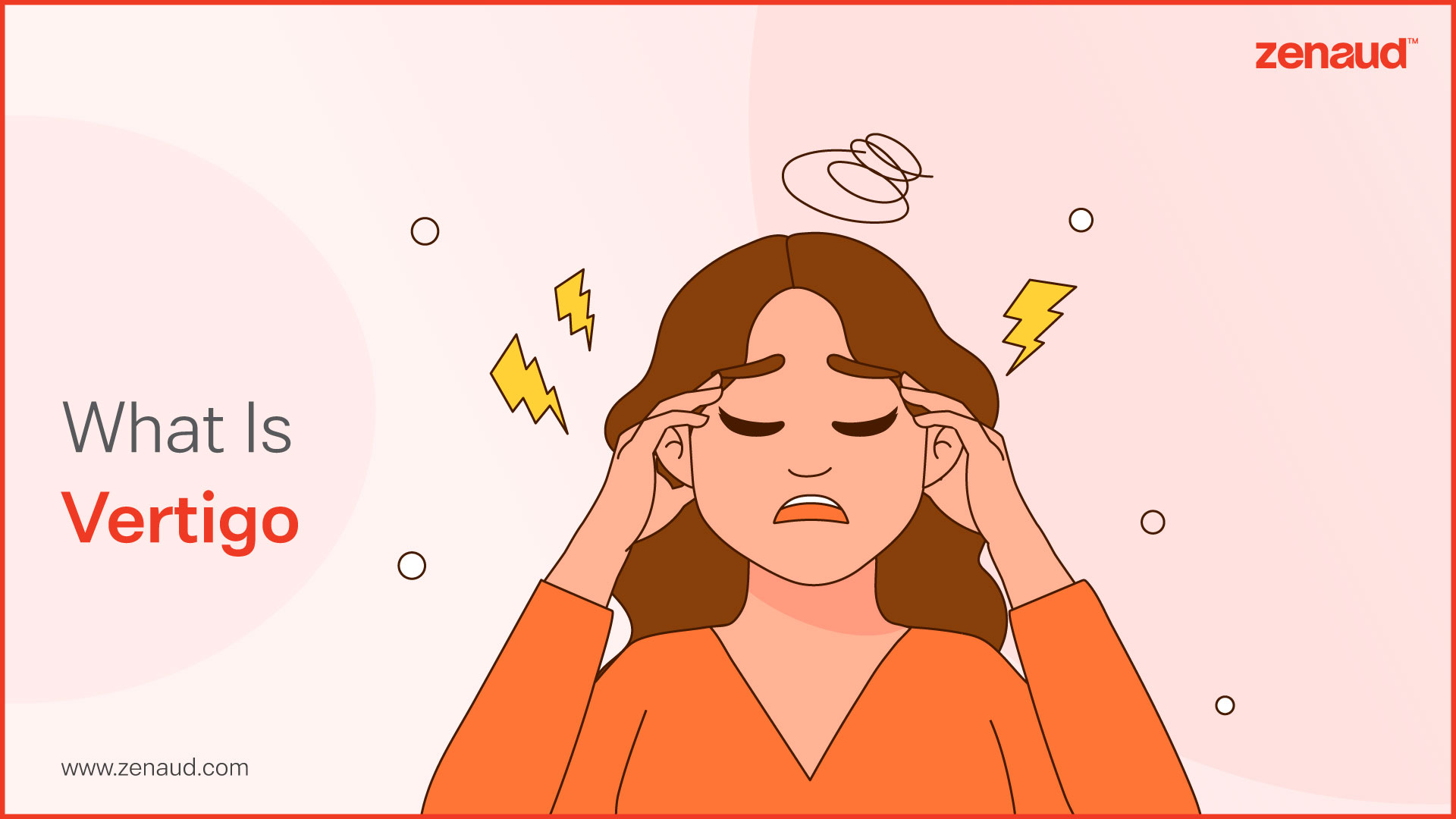
What Is Vertigo? When the World Suddenly Feels Off Balance
Vertigo is one of those experiences that’s hard to explain until you’ve felt it yourself. One moment you’re fine, and the next, it feels like the room is moving — spinning, tilting, or pulling you in a direction you didn’t choose. It can happen while lying down, turning your head, or even just standing still.
Naturally, the first question people ask is, what is vertigo — and should they be worried?
Vertigo isn’t a disease by itself. It’s a symptom, and while it can feel frightening, understanding why it happens often brings a lot of relief.
What Is Vertigo?
So, what is vertigo in simple terms? Vertigo is a sensation of false movement. Even though your body is still, your brain is being told that you’re moving.
This usually happens because of a problem in the inner ear, which is responsible for balance. When the balance system sends mixed or incorrect signals to the brain, your sense of stability is disrupted.
People describe vertigo in different ways — spinning, swaying, feeling pulled to one side, or feeling like the ground is moving. Along with this, nausea, unsteadiness, and anxiety are very common.
Why Vertigo Happens
A very common concern is why vertigo happens, especially when it appears suddenly without warning.
In most cases, vertigo happens because something has disturbed the balance system in the inner ear. This could be due to:
- Inner ear infections or inflammation
- Tiny calcium crystals shifting inside the ear
- Head injuries
- Poor blood flow to balance centres
- Certain medications
- Migraine-related balance problems
Because balance relies on extremely delicate signals, even a small disruption can trigger vertigo. The good news is that many of these causes are treatable.
Is Vertigo Dangerous?
One of the biggest fears people have is, is vertigo dangerous?
In most cases, vertigo itself is not dangerous or life-threatening. However, it can become risky because it increases the chances of falls, especially in older adults.
Vertigo should be taken more seriously if it comes with symptoms like severe headache, sudden hearing loss, weakness on one side of the body, slurred speech, or vision problems. These signs need immediate medical attention.
So while vertigo is often manageable, it should never be ignored.
How Patients Normally Perceive Vertigo
Vertigo is not experienced in the same way by everyone. In some people, vertigo can last for a few seconds, while in others, it can last for long hours or even for days.
Common vertigo experiences include:
- The earth moving round or spinning
- Nausea
- Pulled toward one side
- Finding difficulty in walking, thus loss of balance
- Wanting to vomit as time goes by
- Being afraid to move one's head
- Nervousness about when an episode might come on.
Understanding such sensations can help the doctor make a diagnosis—an important step in deciding on the correct treatment.
How to Tell Which Ear Is Causing Vertigo
Vertigo usually arises so clearly from one ear that usually one can tell which ear it is. So knowing how to tell which ear is causing vertigo means you have taken a step in correctly diagnosing it.
Most doctors will know by:
- Asking which side precipitates vertigo upon recumbency
- Observing eyes' movement analysis and symptoms
- Conducting simple head and jaw-position tests
- Checking for hearing differentiation in the two ears
For instance, if you turn your head left, worsening dizziness. These small clues are very helpful in guiding treatment.
What Is the Treatment for Vertigo?
People often ask, what is the treatment for vertigo, hoping there’s a single solution. In reality, treatment depends on the cause.
Common treatments include:
- Medicines to reduce dizziness and nausea
- Special head and body movements to reposition inner-ear crystals
- Balance therapy to retrain the brain
- Treating infections or inflammation
- Managing migraine or blood pressure issues
With the right diagnosis, many people start feeling better much sooner than they expect.
How to Cure Vertigo
Relieving vertigo is one of many things people with daily vertigo often desire. The classic formulations of vertigo are usually manageable, and some seem to disappear completely.
Unyielding helpful steps may include:
- Following consistent treatment Practice balance Exercise.
- Avoidance of sudden head movements during the recovery period.
- Enough water and rest.
- Stress, perhaps making the vertigo worse, has to be taken care of.
Finally, many people would experience a gradual decrease in the severity and frequency of vertigo episodes.
Living With Vertigo
Living with vertigo can be emotionally draining. The fear of dizziness returning can make people hesitant to move freely, drive, or go out alone.
But once you understand why vertigo happens and what triggers your symptoms, it becomes far less frightening. Many people learn to manage vertigo confidently with treatment, exercises, and lifestyle adjustments.
Support from doctors and balance specialists plays a big role in recovery.
When You Should See a Doctor
You should seek medical help if vertigo:
- Appears suddenly or severely
- Keeps coming back
- Lasts longer than a few days
- Comes with hearing loss or ringing
Early evaluation not only rules out serious causes but also speeds up recovery.
Final Thoughts
Vertigo can feel overwhelming when it first strikes, but understanding it makes all the difference. Knowing what is vertigo, why vertigo happens, and what is the treatment for vertigo helps replace fear with clarity.
Most cases are manageable. Many improve with proper care, and some resolve completely. If the world feels like it’s spinning, it’s not something to panic about — but it is something to pay attention to.
With the right support, balance can return, confidence can rebuild, and life can feel steady again.
Contact us
We are here for all your hearing needs, from hearing tests to hearing aids. Fill out the form below, and we will give you a call soon.
Recent Blogs
By Team Zenaud | Oct. 12, 2026
By Team Zenaud | Oct. 6, 2026
By Sharanya Krishnan - Audiologist | Oct. 3, 2026
By Dattatreya M | Sept. 30, 2026
By Sri Sai Koti Chennupati | Sept. 28, 2026