HEARING TEST
Types of Hearing Tests
By Team Zenaud | Jan. 3, 2026
Types of Hearing Tests: Understanding How Your Hearing Is Checked
Hearing problems don’t always announce themselves loudly. Sometimes, they slip in quietly, missing a few words in a conversation, turning the TV volume up, or feeling tired after talking for a while. When that happens, most people wonder where to start. The answer is simple: a hearing test.
But a hearing test isn’t just one single exam. There are different types of hearing tests, each designed to check how your ears hear and how your brain processes sound. Understanding these tests can make the entire process feel far less intimidating.
Why Hearing Tests Matter
A proper hearing exam does much more than tell you whether you can hear or not. It helps identify how well you hear, which sounds you struggle with, and why those difficulties are happening.
Hearing tests are used to:
- Detect early hearing loss
- Understand the type and degree of hearing loss
- Decide whether hearing aids or treatment are needed
- Monitor hearing over time
The earlier a hearing issue is found, the easier it is to manage — which is why regular testing is so important.
Pure Tone Audiometry Test
One of the most common and widely used tests is the audiometry test. This is usually the first test people think of when they imagine a hearing check.
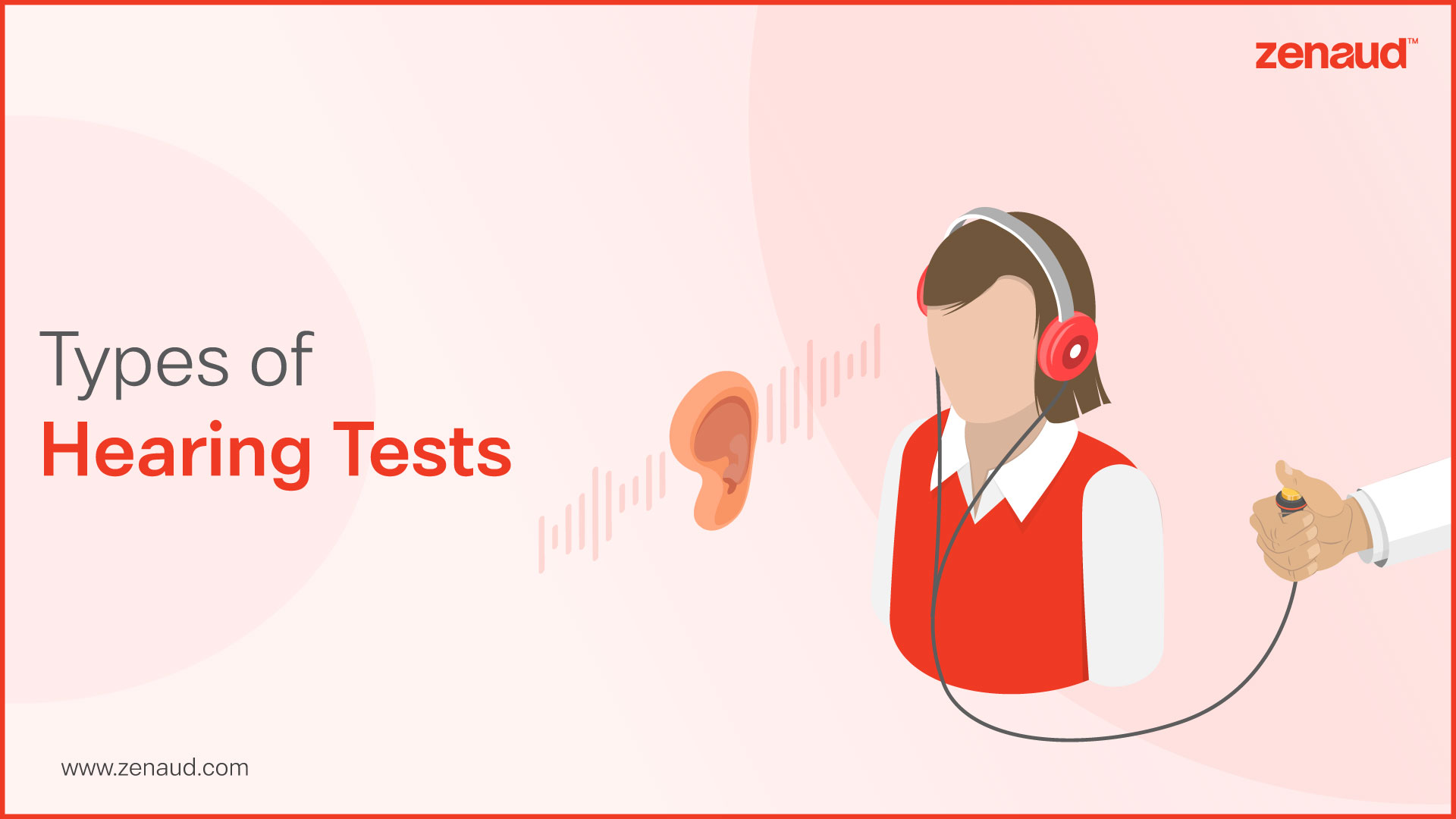
In the course of this test, you are provided with headphones, and you listen to different beeping sounds at various pitches and volumes. You will be required to respond by either pressing a button or raising your hand every time you hear a sound.
This hearing loss test is capable of revealing:
- The least sounds which are audible to you
- Degree of hearing loss i.e. mild, moderate, severe, or profound
- Comparison of ear's hearing ability
Furthermore, the results are illustrated on a graph known as an audiogram, which presents a distinct representation of your hearing capability.
Speech Audiometry
In the beginning, being labelled hard of hearing was not only about not being able to hear tone signals but also about the comprehension of oral language. Therefore, most hearing tests include speech audiometry as a significant segment.
During this examination, the patient is supposed to listen to a word pronounced and then tell the tester that word. Different volumes of words are played to ascertain the degree of the patient's speech understanding.
The procedure aids the audiologists in putting themselves in the patient’s place when the person claims, “I can hear people talking, but I can’t understand what they are saying.”
One of the main functions of speech audiometry is to help these professionals with the decision about hearing aids and their initial programming.
Tympanometry
Tympanometry checks how well your middle ear is working. It’s especially useful if there’s suspicion of fluid, infection, or eardrum issues.
During this hearing test, a small probe is placed in the ear canal. It gently changes air pressure and measures how the eardrum responds.
This test is commonly used for:
- Children with frequent ear infections
- Adults with blocked or muffled hearing
- Checking middle ear health before fitting hearing aids
It’s quick, painless, and provides valuable information that a regular audiometry test might miss.
Otoacoustic Emissions (OAE) Test
Test OAE checks the efficiency of the inner ear (cochlea). It is generally considered an auditory screening test, particularly for infants and small children.
A very small probe put in the ear produces soft sounds and records the echo which is reflected from the inner ear. If the cochlea is working properly, it produces a response.
This test is:
- Non-invasive
- Quick
- Ideal for babies, toddlers, and people who can’t respond verbally
Because of this, it’s commonly used as a first-level hearing screening.
Auditory Brainstem Response (ABR) Test
The ABR test looks beyond the ear and checks how sound signals travel from the ear to the brain.
Small sensors are placed on the head, and sounds are played through earphones. The sensors record how the brain responds to sound.
This test is often used when:
- Newborn hearing screening needs confirmation
- Hearing loss is suspected but other tests are unclear
- Nerve-related hearing issues are suspected
It’s an advanced hearing loss test that helps diagnose complex hearing conditions.
Hearing Screening
An auditory screening checks for potential hearing impairments. This does not diagnose a hearing problem, but is to let you know whether diving into a detailed investigation is necessary or not.
Screening examination includes, but is not limited to:
- Checking in schools
- During health examinations
- For any health monitoring
- Hearing tests at birth
Screening itself is not the conclusion. For those who fail the test, a follow-up hearing evaluation is necessary.
Digital and Self-Hearing Test
With the internet, digital has also kept up with changing times, and people now can take hearing tests online using online platforms and applications. Online methods do provide tentative actions rather than replacing a professional hearing evaluation.
Its possible utilities are:
- For a first test on oneself
- To pursue change over a long term
- For getting people to opt for clinical help
Remember: An online self-assessment for hearing does not allow one to replace clinic audiometry for an exact diagnosis and treatment.
Which Hearing Test Do You Need?
Not every individual requires all tests. The suggested hearing test varies with age, symptoms, and medical history.
For instance:
- Gradual hearing loss in adults mostly leads to audiometry
- Speech delay in toddlers can lead to OAE or ABR tests
- Earache or infection may result in tympanometry for the person
An audiologist selects the most appropriate tests to provide a comprehensive view of your hearing.
How Often Should You Get Your Hearing Checked?
For asymptomatic adults, the recommendation is to have a hearing test every 2 to 3 years. If you are exposed to loud sounds, have diabetes, or experience any change in hearing, annual hearing testing is recommended.
Infants should be screened for hearing at birth, before entering school, and again during their school years.
Regular testing also helps detect problems early— when they are still in their early stages.
Final Thoughts
Many people have misconceptions about a hearing test, and it is quite a simple procedure, leading to the good side of hearing and talking. It will take less time to understand the various types of hearing tests than to become familiar with the whole process.
No matter if it is a one-minute hearing loss test, a thorough audiometry test, or an auditory screening test, all of them contribute to the preservation of your hearing health.
If you already have doubts about the state of your hearing, don't hesitate to take it. A proper hearing examination can not only give you answers and reassurance but also the right way forward — for better hearing always means starting with understanding.
FAQs
1. What are the different types of hearing tests?
The types of hearing tests include audiometry, speech testing, tympanometry, otoacoustic emissions (OAE), auditory brainstem response (ABR), and basic hearing screening.
2. How many types of hearing tests are there?
There are several types of hearing tests, each designed to assess different components of the auditory system, from the ear itself to how the brain processes sound.
3. What is the most accurate test for hearing loss?
Pure-tone audiometry, performed by an audiologist, is considered the most accurate method for measuring hearing loss.
4. What is the Weber and Rinne test?
The Weber and Rinne tests are simple tuning fork tests used to tell whether hearing loss is conductive or sensorineural quickly.
Contact us
We are here for all your hearing needs, from hearing tests to hearing aids. Fill out the form below, and we will give you a call soon.
Recent Blogs
By Team Zenaud | Oct. 6, 2026
By Sharanya Krishnan - Audiologist | Oct. 3, 2026
By Dattatreya M | Sept. 30, 2026
By Sri Sai Koti Chennupati | Sept. 28, 2026
By Sri Sai Koti Chennupati | Sept. 24, 2026