HEARING LOSS
Conductive vs Sensorineural Hearing Loss: Key Differences Explained
By Sri Sai Koti Chennupati | July 2, 2026
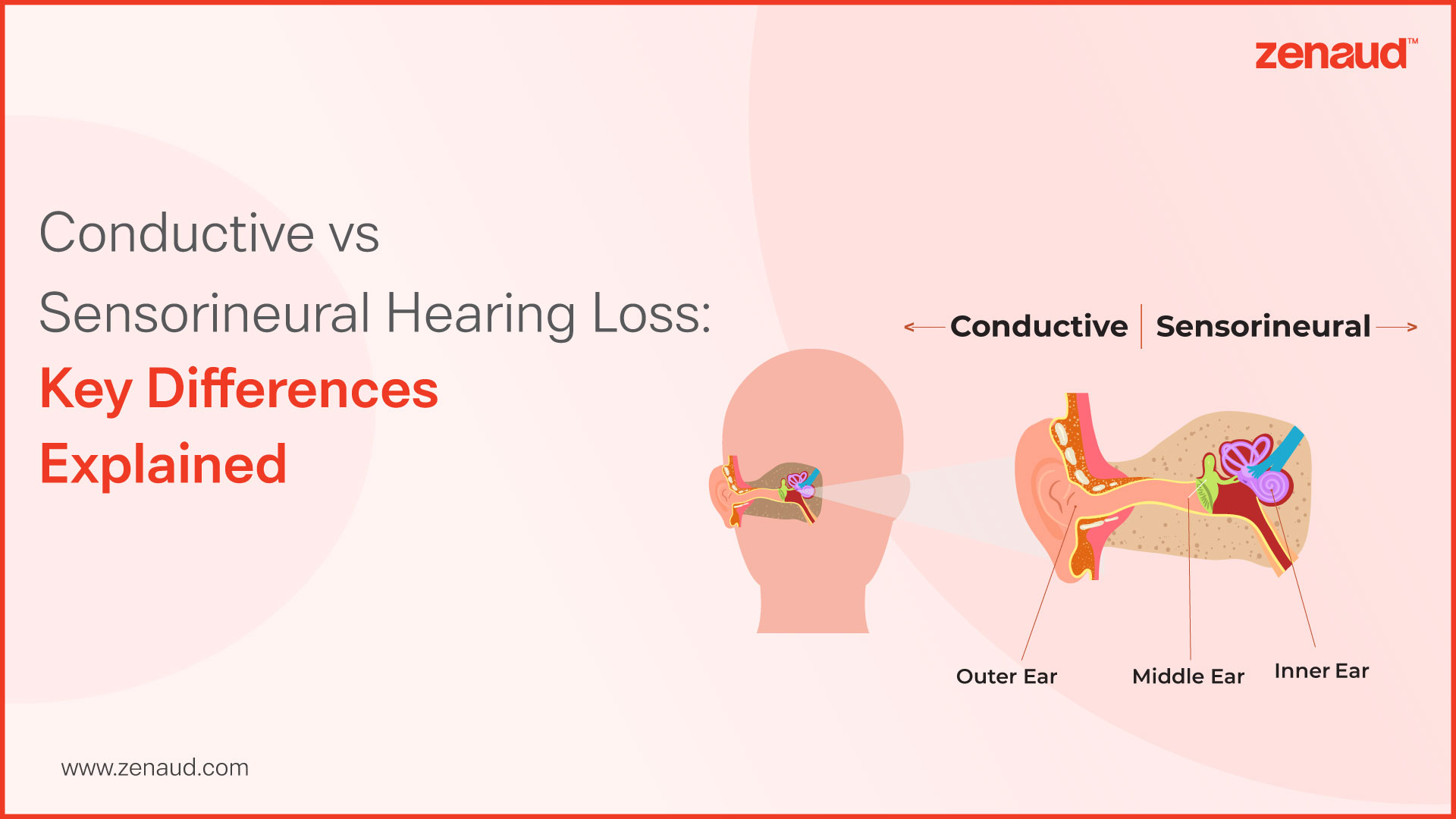
Understanding the different types of hearing loss can be confusing for many individuals and their families. It is common to leave an audiologist's office with a diagnosis but little clarity on what that diagnosis actually means for everyday life. This guide breaks down the two most common categories of hearing impairment and explains how they differ, so you can better understand what to expect and what steps may come next.
What Is Conductive Hearing Loss?
Conductive hearing loss develops when sound is prevented from passing efficiently through the outer or middle ear on its way to the inner ear. In practical terms, something is physically blocking or interfering with that pathway before the sound even reaches the structures responsible for processing it. This form of impairment stems from a problem with the ear's mechanical function, whether in the outer canal or the middle ear, rather than from any damage to the auditory nerves.
Several factors can cause this, including:
- A buildup of earwax or the presence of a foreign object lodged in the ear canal
- Fluid trapped behind the eardrum, frequently the result of an ear infection
- A ruptured or scarred eardrum
- Otosclerosis, a condition in which the small bones of the middle ear gradually stiffen and lose their ability to move freely
- Congenital abnormalities affecting the structure of the ear
Fortunately, this type of hearing difficulty generally responds well to medical treatment or surgery. In a good number of cases, patients regain either partial or complete hearing once the root cause has been addressed.
What Is Sensorineural Hearing Loss?
Sensorineural hearing loss is a different issue altogether. It arises from damage to the inner ear itself, or to the nerve pathways that transmit auditory signals to the brain, and tends to present a more complex challenge for both diagnosis and treatment. This is sometimes referred to as nerve hearing loss because it stems from problems with the cochlea's tiny hair cells or the nerve fibers themselves, rather than a mechanical obstruction.
This form of impairment is far more common than the conductive type and tends to be permanent, since damaged sensory cells in the inner ear generally do not regenerate.
A number of factors can contribute to this condition, among them:
- Natural aging, a process clinically referred to as presbycusis
- Extended exposure to loud or damaging noise levels
- Certain viral infections that affect the inner ear
- A genetic predisposition passed down within families
- The use of medications known to be ototoxic, meaning they carry a risk of damaging hearing
- Trauma to the head or the presence of tumors that impact the auditory nerve
Unlike its conductive counterpart, this form of impairment typically cannot be corrected through surgical means. That said, with appropriate support and the right devices, individuals can still manage it effectively and maintain a good quality of life.
Comparing the Two Types Directly
Placing these two conditions side by side often makes the distinction much easier to grasp:
Understanding Mixed Hearing Loss
It is also important to recognize that not every individual falls cleanly into one category. In some cases, a person experiences a combination of mechanical and nerve-related damage at the same time, a condition known as mixed hearing loss. This can occur, for instance, when someone already dealing with age-related nerve damage goes on to develop a middle ear infection, layering one problem on top of the other.Proper diagnosis by an audiologist is essential in these cases, since the treatment approach will need to address both components.
Exploring Hearing Loss Treatment Options
The path forward really depends on which type of hearing loss you are dealing with, since that determines how your treatment plan will be structured.
- For mechanical issues affecting the outer or middle ear:
- Professional earwax removal
- A course of antibiotics to clear an underlying infection
- Surgical repair of the eardrum, in more involved cases
- Surgery to restore movement to the tiny bones of the middle ear
- For damage involving the nerves:
- Hearing aids to amplify and clarify sound
- Cochlear implants for more significant nerve-related loss
- Other assistive listening technologies designed to compensate for a loss of function that cannot be surgically corrected
- Regardless of which category applies to your situation:
- Catching the problem early makes a substantial difference in preserving quality of life
- Delaying an evaluation often allows a manageable condition to progress further
- Postponing diagnosis also delays access to the devices and therapies that could meaningfully improve your ability to communicate
Final Thoughts
If you have started noticing changes in your hearing, even subtle ones, it is worth having them checked out sooner rather than later. Putting it off rarely makes things easier, and in many cases, it only allows the underlying issue more time to progress.
Take the first step with Zenaud. Our team of experienced audiologists is here to help you get a clear, accurate diagnosis and a treatment plan tailored to your specific needs. Do not let uncertainty stand in the way of better hearing.
Book your FREE hearing assessment with Zenaud today and take control of your hearing health, starting now.
FAQ’s
Q: What is the difference between sensorineural and conductive hearing loss?
A: Conductive affects sound flow; sensorineural affects the inner ear or hearing nerve.
Q: What is the difference between conductive hearing loss and sensory neuron loss?
A: Conductive involves the outer/middle ear; sensory neuron loss affects the inner ear or auditory nerve.
Q: How do you know if hearing loss is conductive?
A: A hearing test can confirm if the hearing loss is conductive.
Q: What are the 4 types of hearing loss?
A: Conductive, sensorineural, mixed, and auditory neuropathy (ANSD).

Sri Sai Koti Chennupati
Head of Learning and Development
With a Master's qualification in Audiology and Speech-Language Pathology and more than 18 years of clinical practice, I am devoted to providing the highest standard of diagnostic and rehabilitative care in hearing and communication health.
Contact us
We are here for all your hearing needs, from hearing tests to hearing aids. Fill out the form below, and we will give you a call soon.
Recent Blogs
By Team Zenaud | Oct. 6, 2026
By Sharanya Krishnan - Audiologist | Oct. 3, 2026
By Dattatreya M | Sept. 30, 2026
By Sri Sai Koti Chennupati | Sept. 28, 2026
By Sri Sai Koti Chennupati | Sept. 24, 2026
