HEARING AIDS
Bone Conduction Hearing Aid
By Team Zenaud | Dec. 24, 2025
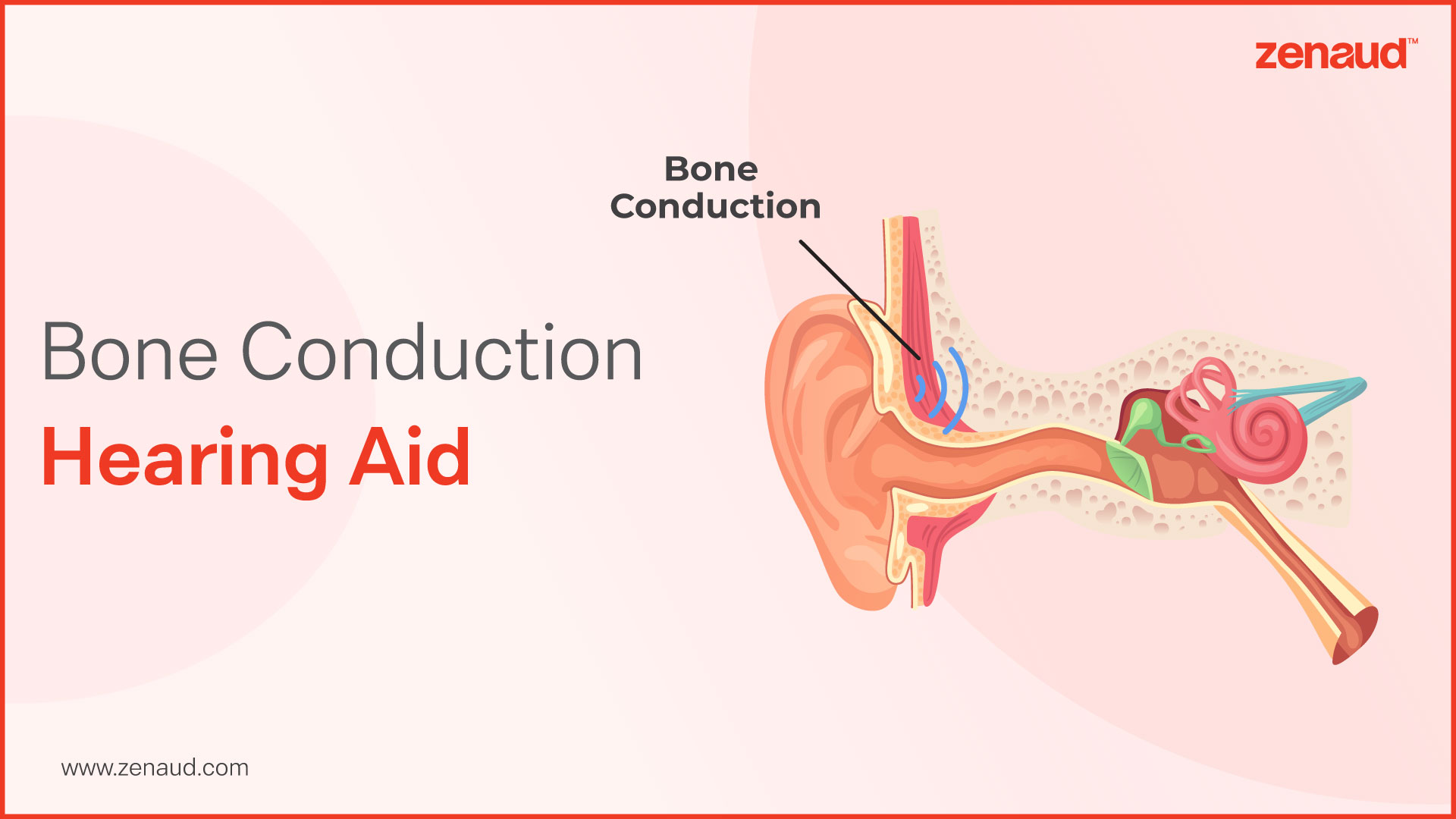
Bone Conduction Hearing Aid: Hearing Through a Different Path
Normally, when one thinks about a hearing aid, they will think of something sitting in or behind one's ear. But the hearing signals do not always have the same route. In some ways, sound may reach the brain through bone vibration rather than the ear canal.
And this is precisely what a bone conduction hearing aid accomplishes. It bypasses the parts of the ear that so often simply wouldn't work and carries the sound vibration directly into the inner ear through the skull. For many, the technology of bone conduction is life-changing for people who experience chronic ear issues or specific types of hearing loss.
What is a Bone Conduction Hearing Aid?
A bone conduction hearing aid works by changing sound into soft vibrations. Instead of passing through the ear canal and the middle ear, the bone vibrations move through the skull straight into the inner ear (cochlea), where hearing molecules and mechanisms only.
These data, together, thus confirm the advantages associated with BCD (Bone Conduction Device) patients following exercise training.
This technology has opened up hearing possibilities for people who were once told regular hearing aids wouldn’t work for them.
Who Needs a Bone Anchored Hearing Aid?
A bone anchored hearing aid is usually recommended for people with:
- Chronic ear infections or constant ear discharge
- Missing or malformed ear canals
- Conductive or mixed hearing loss
- Single-sided deafness (hearing loss in one ear only)
- Conditions where regular hearing aids cause discomfort or don’t help
Instead of forcing sound through a damaged pathway, bone conduction simply takes another route — one that works.
Understanding the BAHA Hearing Aid
You’ll often hear the term BAHA hearing aid when talking about bone conduction devices. BAHA stands for Bone Anchored Hearing Aid — that’s the BAHA full form.
A BAHA (bone-anchored hearing aid) system is typically composed of two parts:
1. A tiny titanium implant inserted into the skull bone
2. An external sound processor that captures sound and transfers vibrations across the implant
These, in consort, form the BAHA hearing device that gives clear sound and at the same time frees up the ear canal.
What Is a Bone Anchored Hearing Device?
A bone anchored hearing device is the broader category that includes BAHA systems and similar technologies. Some versions attach through a small implant, while others use a headband or soft band — especially for children or people who aren’t ready for surgery.
The idea remains the same: bypass the problem area and send sound directly to the cochlea through bone vibrations.
For many users, this results in clearer sound, fewer infections, and far greater comfort compared to traditional hearing aids.
BAHA Implant and How It Works
A BAHA implant is a small titanium screw placed into the skull bone behind the ear. Titanium is used because it naturally bonds with bone over time, creating a stable connection for sound vibrations.
Once the implant heals, the external processor is attached. This processor picks up sound, converts it into vibrations, and sends them through the implant to the inner ear.
The result? Sound that feels natural, clear, and surprisingly effortless.
BAHA Implant Surgery: What to Expect
Hearing the word “surgery” can feel intimidating, but BAHA implant surgery is generally safe, quick, and minimally invasive.
Here’s what usually happens:
- The procedure is often done under local or general anesthesia
- It typically takes less than an hour
- Most people go home the same day
- Healing takes a few weeks before the sound processor is attached
Doctors carefully assess whether a patient is suitable for surgery before recommending it. For children, the device may be used with a soft band until they’re old enough for implantation.
Life With a BAHA Hearing Device
People who switch to a BAHA hearing device often describe the experience as “finally hearing comfortably.” There’s no pressure inside the ear, no constant moisture buildup, and no irritation from ear molds.
Because the ear canal remains open, many users find the sound more natural and less tiring — especially during long conversations. It also reduces the risk of recurring ear infections, which is a major relief for many patients.
Bone Conduction Hearing Aid vs Regular Hearing Aid
A regular hearing aid amplifies sound and sends it through the ear canal. A bone conduction hearing aid, on the other hand, skips the ear canal completely.
This makes bone conduction ideal for people whose ear canal or middle ear cannot transmit sound effectively. It’s not necessarily “better” — it’s just better suited for certain hearing conditions.
Choosing between the two depends entirely on your hearing test results, ear health, and daily comfort.
Basic Advantages of Bone Anchored Hearing Aids
In bone anchored hearing aid users, there are certain benefits they almost always recognise, such as:
- Sounds and speech are becoming clearer without any blockages within the ear canal
- No more frequent infections and discharge from the ears
- The convenience in having it worn for a longer period
- Better speech perception in the presence of traditional hearing difficulties
- A means of hearing that one can fall back on after standard hearing aids have proven ineffective
- This technology can restore hearing and restore peace of mind in the right cases.
Is a BAHA for You?
Having BAHA is not a necessity for everyone; that's why a thorough audiometric evaluation is necessary. It is customary to test the feasibility of bone conduction hearing using the pictures before suggesting a permanent solution.
If bone conduction provides clearer hearing during testing, a BAHA hearing aid or a similar device may be the next right step.
Final Thoughts
The hearing path does not universally follow a straight line--and fortunately it doesn't have to. For those who are unable to hear normally with traditional hearing aids or who suffer chronic ear problems, treating sound differently via bone conduction is the big advantage offered by a bone conduction device.
Whether through a bone-anchored hearing aid, a BAHA implant, or a non-surgical approach, bone conduction tech proves that hearing solutions need not be one-size-fits-all.
Bone conduction may be become your last resort. Continuing to hear with the guidance of the modern technology of bone-conduction devices will in time bring big comfort.
FAQs
1. How does bone conduction hearing aid work?
This device for one transmits sound waves through the skull straight into the inner ear, bypassing the ear canal entirely.
2. What is a bone conduction hearing aid?
This is a hearing instrument that allows a patient to hear from vibrations transmitted from bone, instead of sound energy traveling through the ear canal.
3. What are the side effects of a bone conduction hearing aid?
Most people don’t experience serious side effects, though some may notice mild skin irritation or pressure where the device sits.
4. Can you get a bone conduction hearing aid without implant?
Yes, bone conduction hearing aids are available in non-surgical options like soft bands or headbands, especially for children or trial use.
Related Blogs

Invisible Hearing Aids

Bluetooth Hearing Aids
Contact us
We are here for all your hearing needs, from hearing tests to hearing aids. Fill out the form below, and we will give you a call soon.
Recent Blogs
By Team Zenaud | Dec. 24, 2025
By Team Zenaud | Dec. 24, 2025
By Team Zenaud | Dec. 24, 2025
By Team Zenaud | Dec. 24, 2025
By Team Zenaud | Dec. 24, 2025
